
Design Tips
Pavers or Concrete? How to Choose the Right Fit for Your Project
Pavers and poured concrete can both perform well. The right choice comes down to how you'll use the space, your maintenance preferences, and your project's priorities.
By Innova Hardscapes and Landscapes · Published September 1, 2026
A backyard surface has to do more than look good on installation day. It needs to handle summer cookouts, muddy paws, pool traffic, and everyday wear for years. When homeowners weigh pavers versus concrete, the better choice usually comes down to how the space will be used, the condition of the site, and how much long-term flexibility they want — not which material is objectively superior.
A poured concrete patio can create a clean, expansive surface with a lower initial price in many applications. Brick or concrete pavers bring richer pattern, color, and repairability, often making them a strong fit for custom outdoor living spaces. Neither material wins in every yard. The right starting point is matching the surface to the property and the people who use it.
The Core Difference, Briefly
Concrete is poured as one continuous slab over a prepared base, then finished with the selected texture, color, or decorative treatment. Pavers are individual units installed over a compacted aggregate base and bedding layer, with joint material locking the field together.
That difference in construction is why the two materials behave differently over time — concrete moves as one piece, pavers move as a system of many small ones. For the full explanation of how that plays out structurally (cracking, joint behavior, repairs, drainage), see our deeper performance comparison. Here, the short version is enough to make a decision: pavers give you more flexibility to adjust later, concrete gives you a simpler, more uniform surface from day one.
Appearance and Design Flexibility
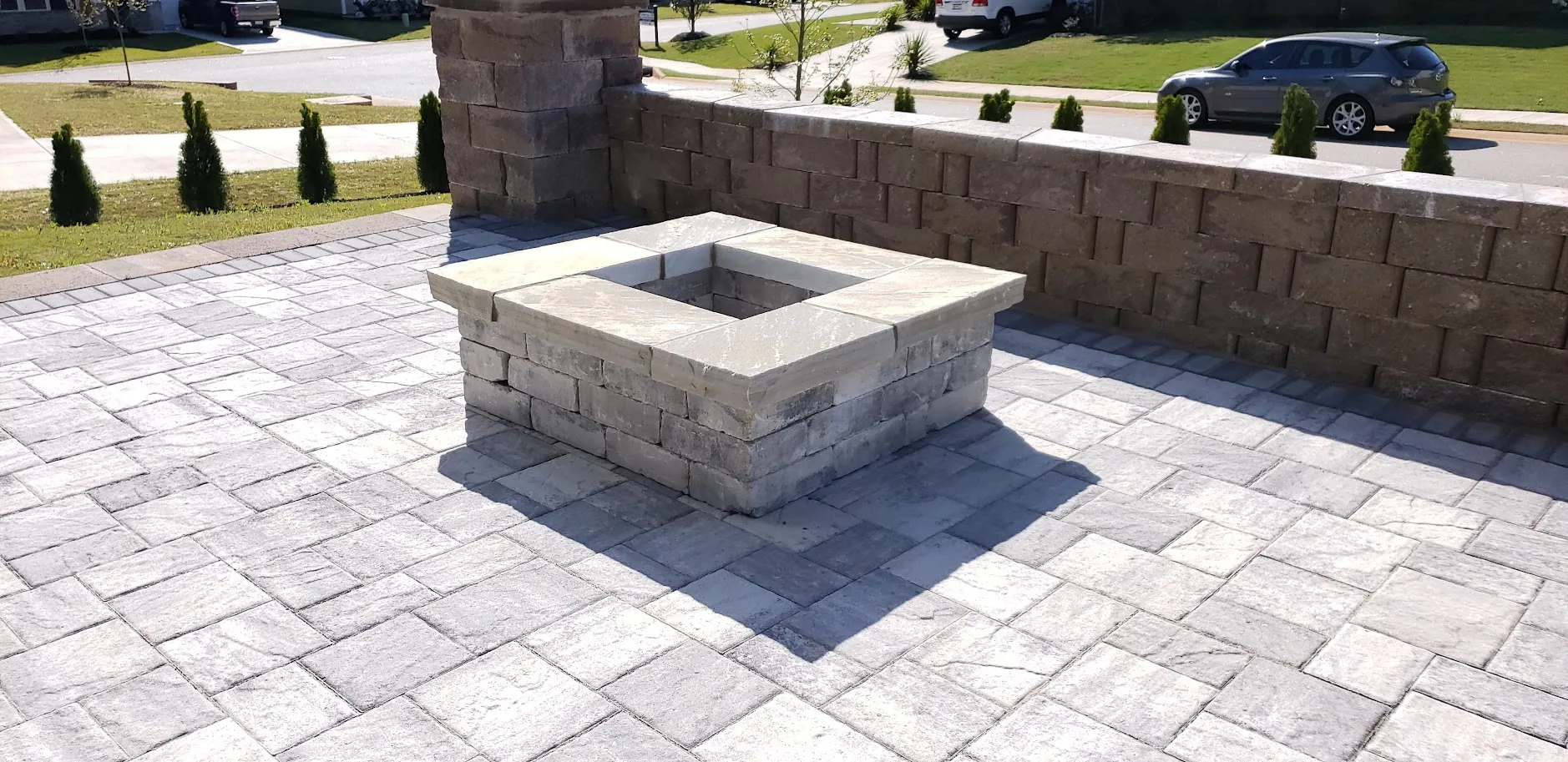
For homeowners planning a true outdoor destination, pavers offer more visual options. They can define a patio edge, frame a firepit, create a dining area beside an outdoor kitchen, or transition naturally into garden beds and turf. Patterns such as running bond, herringbone, and basketweave add character without making the yard feel overdesigned. Border courses and blended colors can also tie a new hardscape into the home’s brick, siding, or existing landscape.
Concrete can be far more attractive than the basic gray slab many homeowners picture. Broom finishes offer a classic, slip-conscious texture. Stamped concrete can imitate stone, brick, or wood, while integral color and stains can soften the look. It is especially effective when a homeowner wants a broad, uninterrupted modern surface or needs a simple, functional pad for a covered patio, shed, or utility area.
The trade-off is authenticity and detail. A quality stamped concrete finish can look impressive, but it remains a slab with patterned joints. Pavers have actual joints, individual edges, and a dimensional appearance that often feels more at home beside planting beds, retaining walls, and masonry features.
Upfront Cost Is Only Part of the Budget
Concrete is commonly less expensive at the start, particularly for a straightforward patio with easy equipment access and minimal grading. Decorative finishes, thicker sections, reinforcement, demolition, and difficult site conditions can narrow that gap quickly. Pavers usually require a larger initial investment because the installation is more labor-intensive — the excavation, base compaction, and precise fitting take real time, and that work is what keeps the finished surface level and attractive.
For a driveway, pool deck, or patio connected to a larger backyard transformation, it is wise to consider the entire scope rather than comparing only cost per square foot. A patio may need steps, drainage, lighting sleeves, a seat wall, a fire feature, or landscaping around its perimeter. A thoughtful plan can prevent the expense and disruption of cutting into a finished surface later.
Drainage Is a Decision Factor, Not Just a Detail
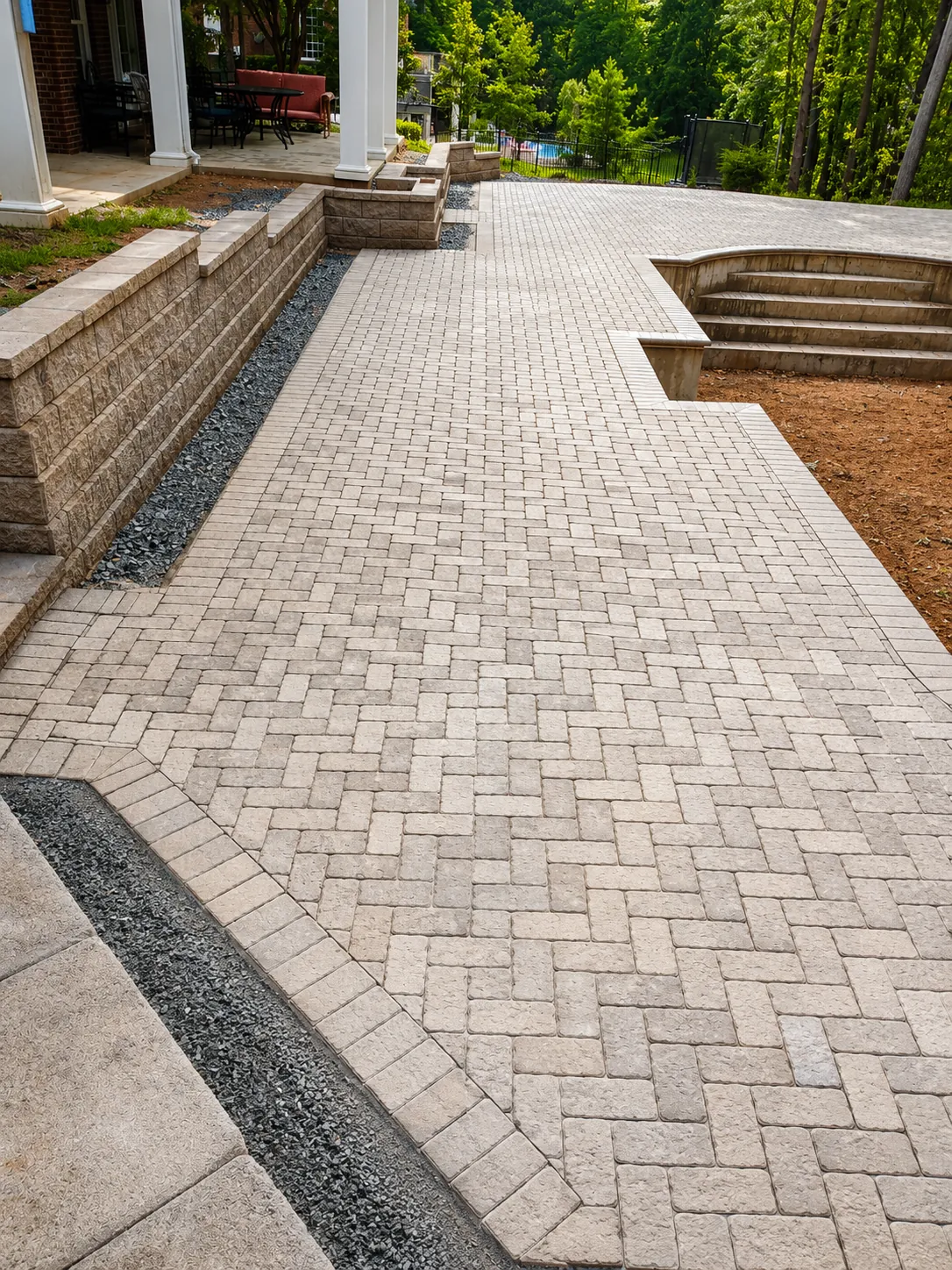
Both materials depend on the same thing to perform well over time: a site that sheds water away from the surface instead of letting it collect underneath. Neither material solves a drainage problem on its own, and neither is automatically safer to install on a site with known water issues.
What that means practically for choosing between them: if your property already has a wet spot, a slope toward the house, or heavy clay that holds water, that is a conversation to have with your contractor before picking a surface, not after. A drainage solutions assessment as part of the design process protects whichever material you choose.
Maintenance and Repairs Over Time
Both surfaces benefit from regular care — sweeping away leaves and soil, rinsing off pollen and spills, and addressing weeds or organic buildup before stains set in. For pavers specifically, professional cleaning and sealing may be recommended depending on the material, finish, and how much you care about color retention.
The practical difference shows up when something needs fixing. A damaged or stained paver can generally be replaced individually; a cracked or stained section of concrete usually means patching, slab lifting, or living with a visible repair, since color-matching an older pour is difficult. If low-maintenance, “fix it and move on” repairs matter to you, that repairability is a real point in favor of pavers.
Paver joints do need occasional attention of their own, especially after heavy cleaning or years of use — polymeric sand helps stabilize joints and limit weed growth when installed properly.
Comfort, Safety, and Everyday Use
A pool deck, front walk, and driveway have different demands. Around pools, traction, drainage, and surface temperature deserve special attention. Some paver colors and finishes can be more comfortable underfoot than a dark, dense concrete finish, but material color, direct sun, and surrounding shade all affect heat more than the base material does. Textured concrete can provide good traction, though certain stamped or sealed finishes may become slick if the wrong product is used.
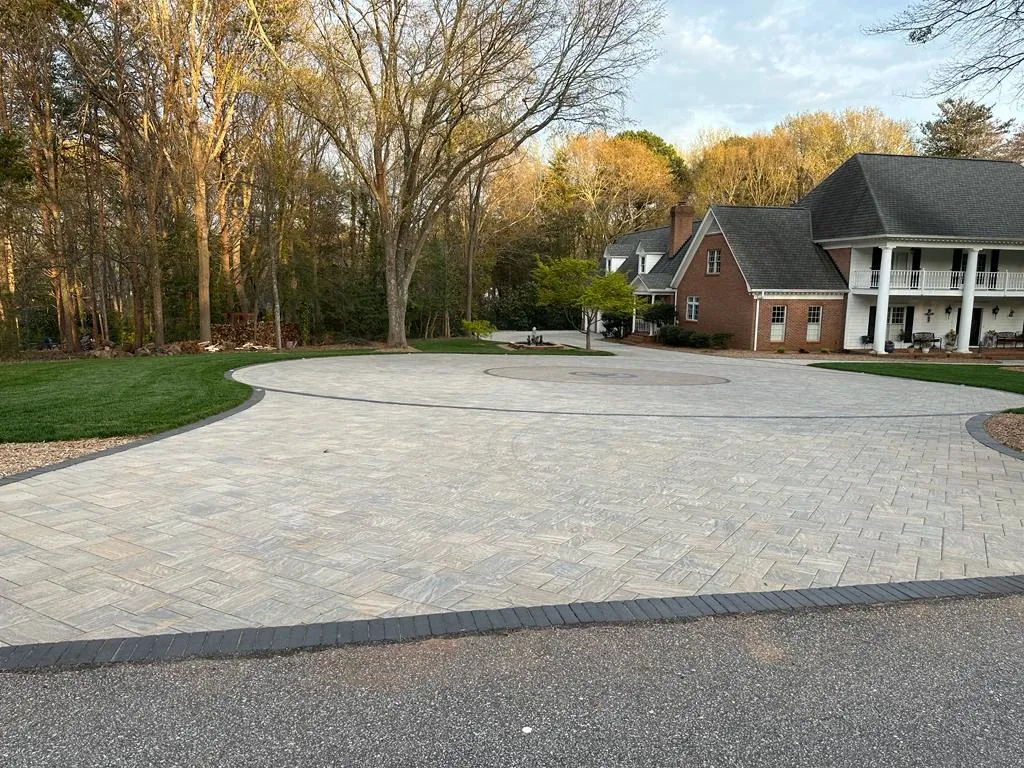
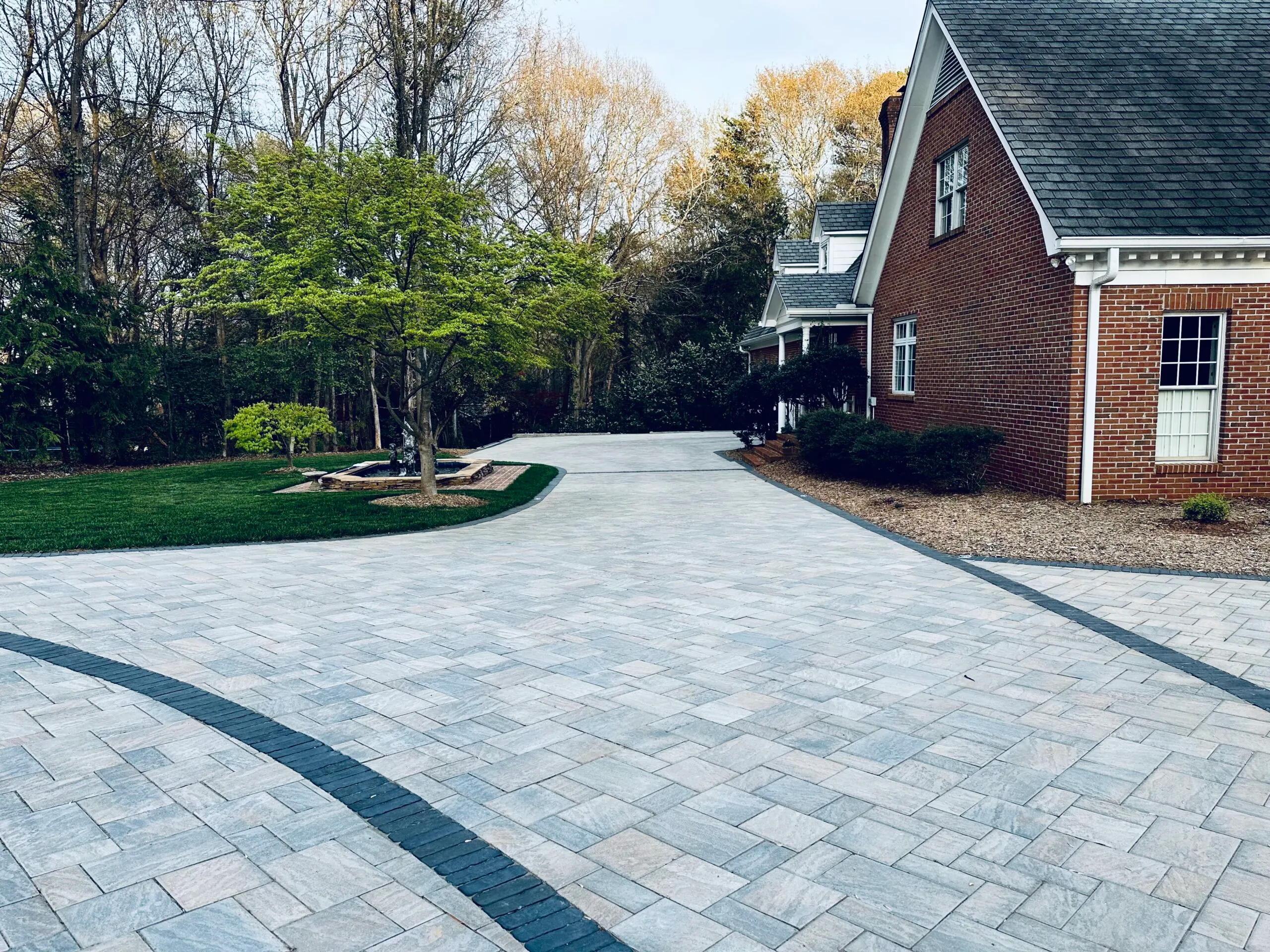
For driveways, concrete provides a stable, clean appearance and can be an efficient choice for homes with a traditional layout. Paver driveways make a stronger architectural statement and can elevate curb appeal, but they require an installation designed for vehicle loads — a patio-grade paver assembly is not automatically suitable for a driveway.
For patios, pavers often give homeowners more freedom to create zones — a central dining area that shifts into a curved walkway, a firepit gathering space, or a quiet garden terrace, without the hard rectangular limits of a single slab. Concrete may be the better fit when the goal is simple, open, and contemporary.
Which Surface Fits Your Project?
Choose concrete when a clean continuous surface, a more restrained starting budget, or a straightforward functional space is the priority. It is often a practical option for a basic patio, side yard pad, or driveway where the design does not need extensive pattern work.
Choose pavers when visual detail, custom layout, and long-term repair flexibility matter most. They are especially well suited to patios, walkways, pool areas, firepit spaces, and driveways intended to become a defining part of the property.
The strongest result may also combine materials. A concrete base can serve a covered outdoor room while a paver patio extends into the landscape. A paver border can add definition around a concrete surface. The goal is not to force one product across every square foot, but to give each part of the yard a purpose.
Before selecting a color or pattern, look closely at drainage, access, existing grades, and how your family expects to use the space five years from now. A well-planned hardscape should feel like it belonged with the home from the beginning, while giving you more reasons to enjoy the yard every season.
Related Services
Drainage Solutions
Solves standing water and erosion issues before they damage anything else on the property.
Driveways
Paver driveways built on a base engineered for daily vehicle traffic, not just poured for looks.
Patios
Durable, precisely-laid patios built on a proper base — the difference shows up years later, not on day one.
Related Articles
Can Patios Increase Home Value in Upstate SC?
September 23, 2026
Can patios increase home value? A well-designed patio can improve buyer appeal, daily living, and resale potential for Upstate South Carolina homes alike.
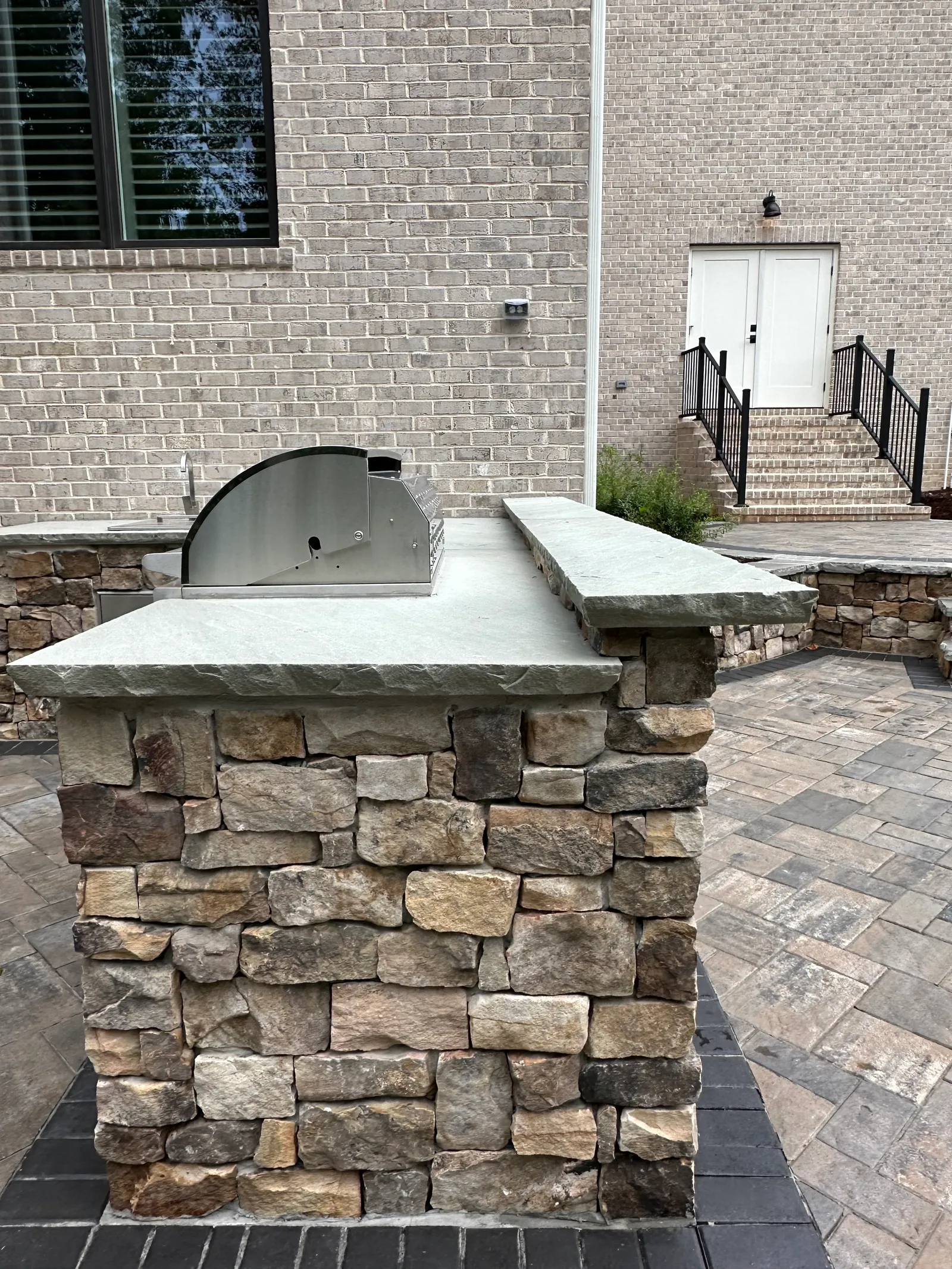
Outdoor Kitchen Planning Checklist for Upstate SC
September 19, 2026
Use this outdoor kitchen planning checklist to shape a practical Upstate SC space for cooking, gathering, and easy year-round enjoyment with your family.
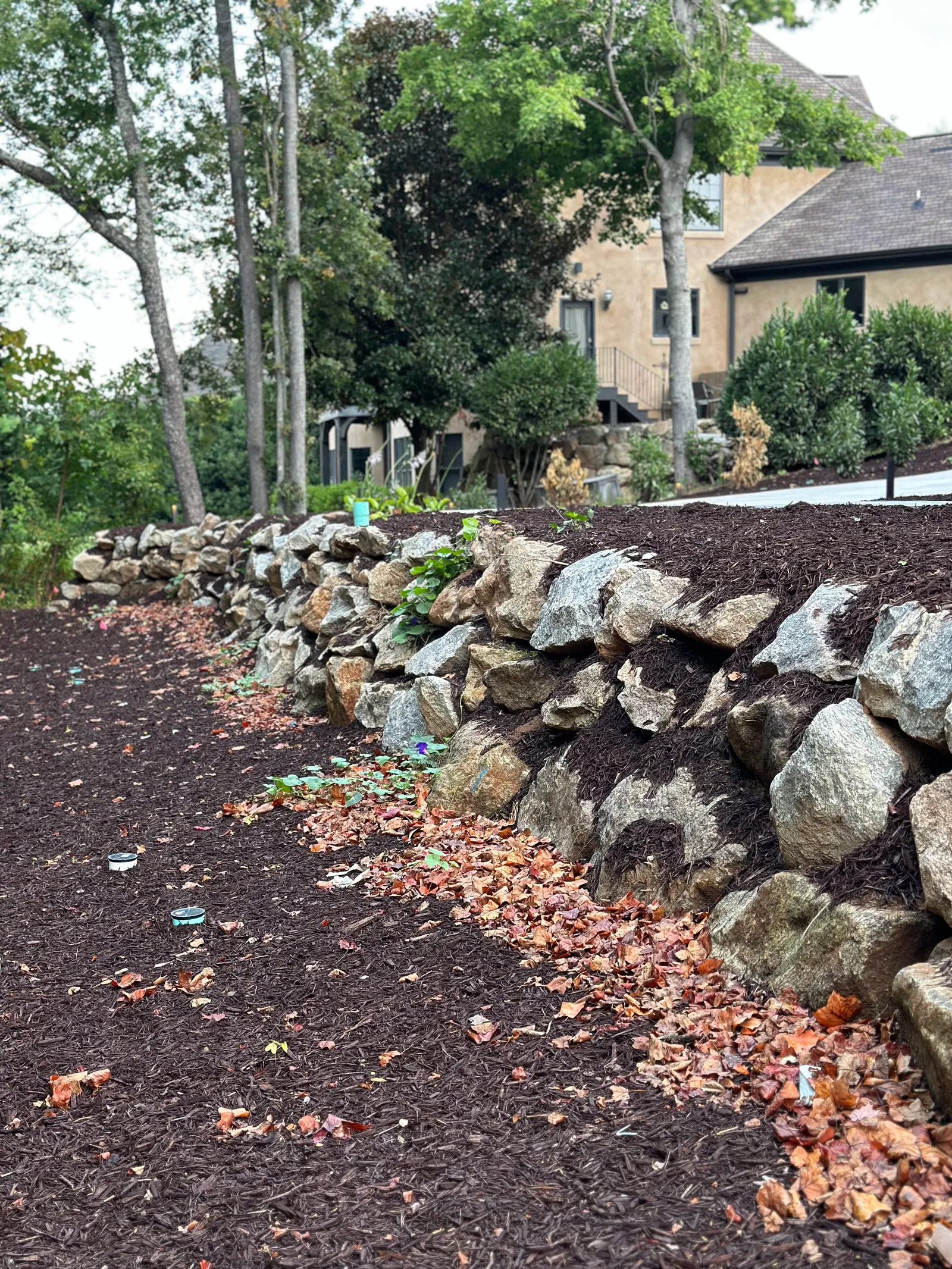
12 Best Low Maintenance Landscape Ideas for Yards
September 15, 2026
See the best low maintenance landscape ideas for Upstate SC homes, from durable patios to smarter planting plans that look polished with less weekend work.
Ready to start your project?
Tell us about your space and we'll follow up to schedule a consultation.