
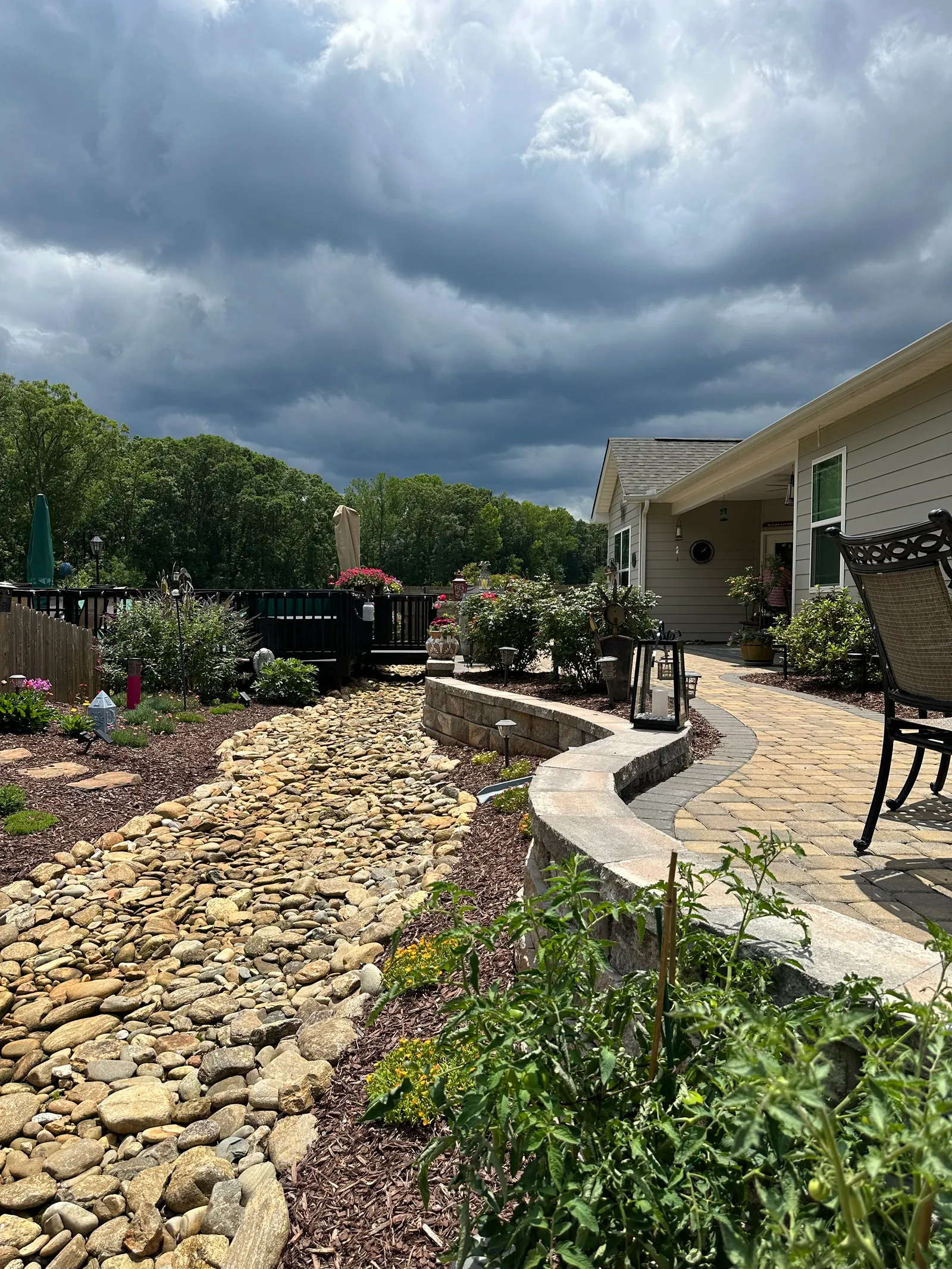
Design Tips
Landscape Drainage That Protects Your Yard
Landscape drainage protects your Upstate SC home from soggy lawns, erosion, and foundation runoff with a plan built for your property, soil, and lifestyle.
By Innova Hardscapes and Landscapes · Published August 26, 2026
A beautiful patio, healthy lawn, and well-planned garden can all be undermined by one problem: water moving where it should not. Effective landscape drainage gives rainwater a deliberate path away from your home, hardscape features, planting beds, and low-lying areas. For homeowners across Upstate South Carolina, where heavy rain can arrive quickly and many properties have slopes, clay soils, or uneven grades, drainage is often the work that makes every other outdoor improvement last.
A wet spot in the yard is not always an emergency. But recurring standing water, washed-out mulch, muddy turf, water pooling beside a patio, or runoff collecting near the foundation are signs that the property needs more than another load of topsoil. The right solution starts with understanding why the water is collecting and where it can safely go.
Why Landscape Drainage Matters in Upstate SC
Water naturally follows gravity, but a yard does not always guide it well. Roof runoff, driveway runoff, neighboring slopes, compacted soil, and poorly placed hardscape can concentrate water in the same vulnerable area. Over time, that water can soften soil around a foundation, create slippery walkways, stain pavers, damage plant roots, and erode the edges of a lawn or garden bed.
Upstate SC properties can be especially varied. A home in Travelers Rest may sit on a pronounced slope, while a flatter lot in Simpsonville or Mauldin may hold water because the soil drains slowly. Homes in Greer, Taylors, Easley, and Anderson can face either condition, sometimes in different parts of the same yard. A drainage plan should respond to the actual site rather than rely on a one-size-fits-all product.
Good drainage also protects the investment in your outdoor space. A new paver patio needs a stable base and a planned surface slope. A pool deck needs water directed away from the structure and walking areas. A retaining wall may need drainage behind it to relieve pressure from saturated soil. These details are not decorative, but they are essential to a polished, durable result.
Start With the Source of the Water
Before choosing a drain, identify what is feeding the problem. During or shortly after a rainstorm, walk the property and observe where water begins, where it gathers, and where it exits. Look at downspouts, roof valleys, driveway edges, patio slopes, low points in the lawn, and the grade around the home.
A downspout that releases water beside the foundation can create a major issue even if the rest of the yard drains well. In other cases, a patio may appear level but actually send runoff toward the house. Water collecting near a fence line may be coming from a neighboring property or a higher portion of your own yard. The visible puddle is often the final stop, not the original cause.
Soil matters as well. Dense clay can shed water across the surface instead of allowing it to soak in quickly. Compacted ground around construction areas, driveways, or frequently used paths can behave the same way. Adding soil or mulch may disguise a low spot briefly, but it will not correct a grade that continues to direct water there.
If you’re still at the stage of figuring out whether what you’re seeing is actually a drainage problem, these backyard drainage signs walk through how to read what your yard is telling you.
Drainage Is Four Problems, Not One
Adding a drain is often the first thing homeowners reach for, but a drain by itself only addresses one part of a larger picture. Water moving off a property generally involves up to four distinct functions, and a plan that overlooks a relevant one can fall short even when the rest is handled well:
- Grading — shaping the ground so water has a direction to travel in the first place, instead of pooling where it lands.
- Collection — gathering water at the point where it becomes a problem (a low spot, a slope base, a paved surface) before it spreads further.
- Conveyance — moving that collected water somewhere else, usually through pipe, a swale, or a channel.
- Discharge — giving the water a legitimate, stable place to exit the system entirely.
These are planning functions to account for, not four separate structures every project needs built. A simple, well-graded yard may already handle collection and discharge on its own, with nothing more than the existing slope doing the work. Where a built system is needed, though, the same logic applies: a catch basin with no properly sized pipe leading away from it is collection without conveyance, and a pipe that dumps water onto a neighbor’s low spot or a bare slope is conveyance without a real discharge point. That’s part of why “just add a drain” can disappoint — a drain addresses one function, and the others still need to be accounted for somewhere in the plan.
Landscape drainage works best when the approach matches which of those functions the site actually needs addressed. Some yards need a simple correction to the grade and nothing else. Others need a fuller collection-to-discharge system. The goal is never to move water carelessly to another corner of the property — it is to account for each relevant function, not just the most visible one.
Regrading for Better Surface Flow
Regrading reshapes the soil so water flows away from the house and out of trouble spots. It is often the best answer when a lawn slopes back toward the foundation or when a planting bed creates a shallow basin against a patio. Proper grading can be subtle. A successful finished yard should look natural, not like a series of dramatic mounds and trenches.
This option is especially valuable before installing sod, artificial turf, pavers, or a new planting plan. Correcting the grade first prevents the frustration of tearing out finished work later. It may also be enough for a minor drainage issue, making it a more straightforward solution than installing pipe where it is not needed.
French Drains for Saturated Ground
A French drain typically uses perforated pipe surrounded by drainage stone and wrapped in filter fabric. It collects water moving through saturated soil and carries it toward an approved outlet. This can be useful along a wet side yard, at the base of a slope, behind a retaining wall, or near an area that remains soft long after rain.
French drains are effective, but installation quality matters. The trench needs a consistent slope, the pipe needs the right placement, and the system needs a clear place to discharge. A drain with no reliable outlet can simply become an underground reservoir. It also requires thoughtful placement so it does not interfere with tree roots, utilities, future planting, or hardscape foundations.
Catch Basins and Channel Drains for Surface Runoff
When water moves quickly across a driveway, patio, pool deck, or paved walkway, surface collection may be the better choice. Catch basins collect runoff at low points and connect to solid pipe that carries water away. Channel drains are narrow linear drains often installed along the edge of a garage, patio, or pool area where a broad sheet of water needs to be intercepted.
These systems are practical around hardscape because they address water before it reaches doors, foundation walls, or entertainment spaces. The trade-off is visibility and maintenance. Grates need to remain clear of leaves, pine needles, mulch, and debris so water can enter the system freely.
Downspout Extensions and Underground Routing
Roof runoff is concentrated runoff. Even a modest roof can send a surprising amount of water into one location during a storm. Extending downspouts away from the foundation is often a first step. Where visible extensions would interrupt a walkway or landscape design, downspouts can be tied into underground solid pipe and routed to a suitable outlet.
This work needs careful planning. Underground downspout lines should not discharge onto a neighbor’s property, across a public sidewalk, or into a location that creates new erosion. In some cases, routing roof water toward a broad, well-vegetated portion of the yard is enough. In others, a more complete drainage strategy is needed.
Drainage and Hardscape Should Be Planned Together
Drainage is easiest and most cost-effective when it is included in the design of a new hardscape project. A patio should have intentional pitch. The base beneath pavers should drain properly. Edging, steps, retaining walls, and planting beds should work with the water flow rather than block it.
This is where an integrated approach adds value. A backyard may need a new patio for entertaining, but the project may also reveal that runoff is flowing toward the home. Addressing drainage during construction allows the patio, drainage lines, garden areas, and finished grade to be coordinated as one outdoor environment. The result looks more refined because the practical components are built into the plan instead of added as an afterthought.
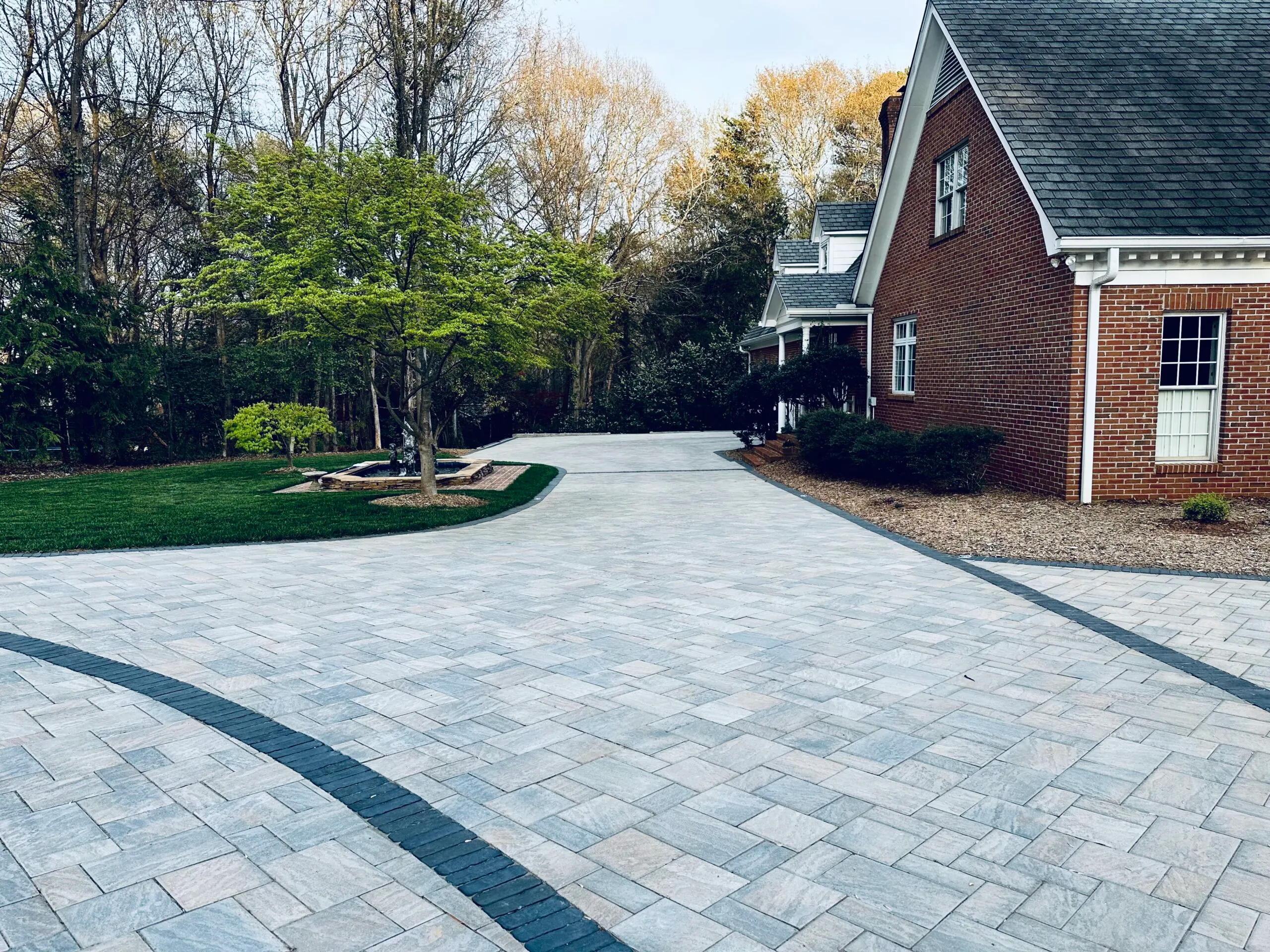
For existing paver patios and driveways, drainage concerns can also signal deeper maintenance needs. Settling pavers, opened joints, or recurring washout may indicate that water is affecting the base below. Restoration can improve appearance, but the source of the water should be corrected so the repair holds up. If the driveway itself is the main concern, our driveway-specific drainage guide goes through the diagnosis and correction process in more detail.
Avoid Quick Fixes That Create Bigger Problems
Homeowners often try to solve wet areas by adding gravel, filling a depression with topsoil, or cutting a shallow ditch through the lawn. These approaches can help in limited situations, but they are not universal answers. Gravel does not drain water away unless there is a path below and beyond it. Extra soil can redirect water to another problem area. An open ditch may erode, become difficult to mow, and look out of place in a finished landscape.
Drainage also should not be treated as a reason to remove every bit of water from a property. Healthy landscapes need moisture, and some rainwater can be managed with thoughtful grading, turf, plantings, and permeable areas. The priority is keeping excess water away from structures, preventing erosion, and preserving usable outdoor space.
What a Professional Drainage Plan Should Include
A well-designed plan begins with a site assessment, not a predetermined drain type. The installer should evaluate slopes, roof runoff, existing hardscape, soil behavior, low points, and available discharge locations. Utility locations, property lines, and the location of mature trees should be considered before excavation begins.
The installation itself should be clean and precise. Pipe needs appropriate slope, fittings need secure connections, and disturbed lawn or planting areas should be restored carefully. If drainage is part of a larger project, the crew should coordinate each stage so the finished surface, planting beds, and hardscape sit at the right elevations.
That order — assessment before drain type — applies whether drainage is the main concern on its own or part of a larger patio, driveway, pool deck, or landscape project.
A dry, usable yard gives you more freedom to enjoy it after the rain stops. Address the water path early, and the lawn, garden, and outdoor living spaces you build around it will have a stronger foundation for years of use.
Related Services
Drainage Solutions
Solves standing water and erosion issues before they damage anything else on the property.
Driveways
Paver driveways built on a base engineered for daily vehicle traffic, not just poured for looks.
Landscape Design
Thoughtful planning that considers how you’ll actually use the space, not just how it photographs.
Related Articles
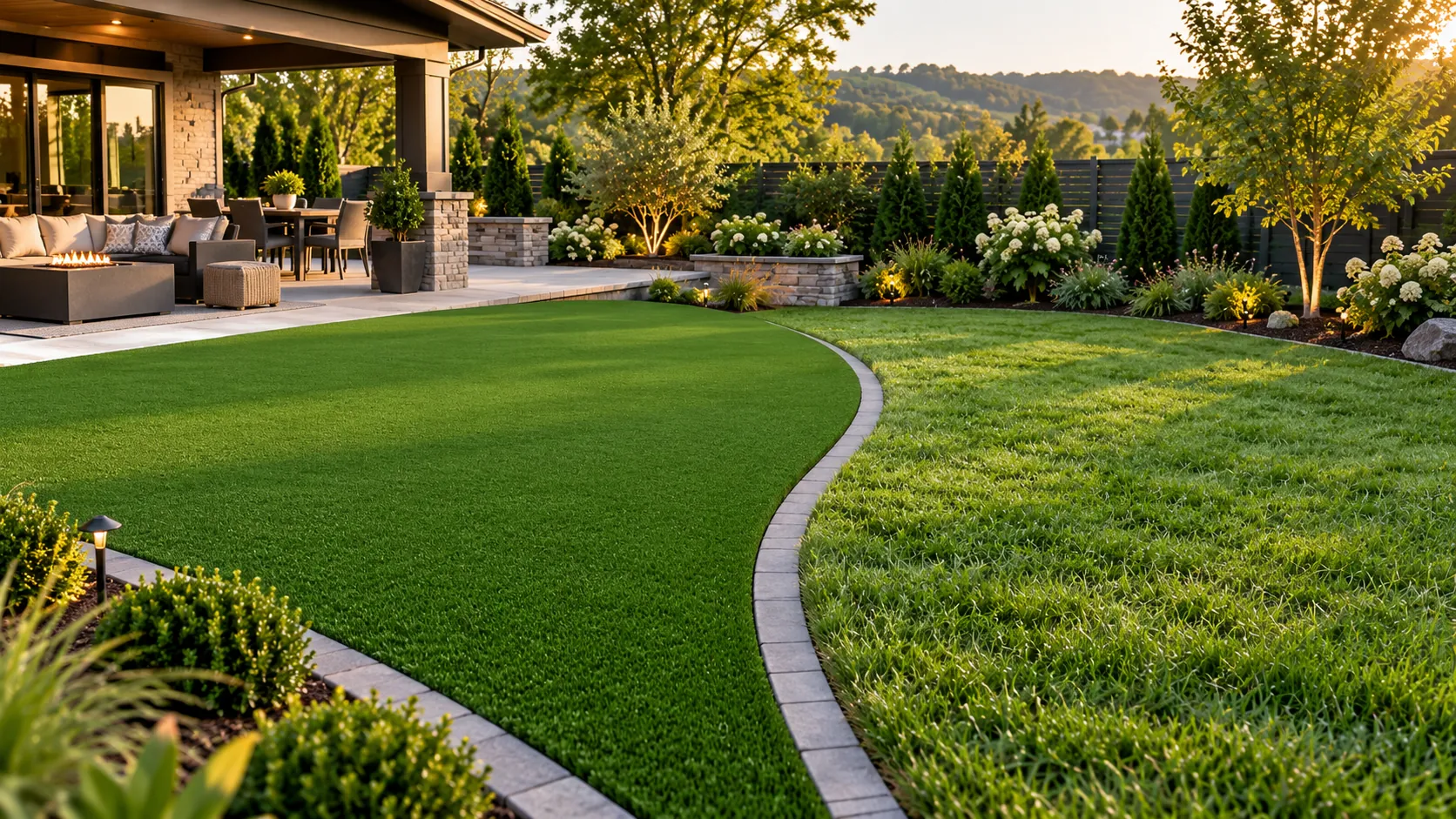
Turf Versus Sod: Which Is Right for Your Yard?
September 11, 2026
Turf versus sod: learn the real difference, compare cost, care, timing, and durability, and choose the right lawn solution for your Upstate SC yard now.
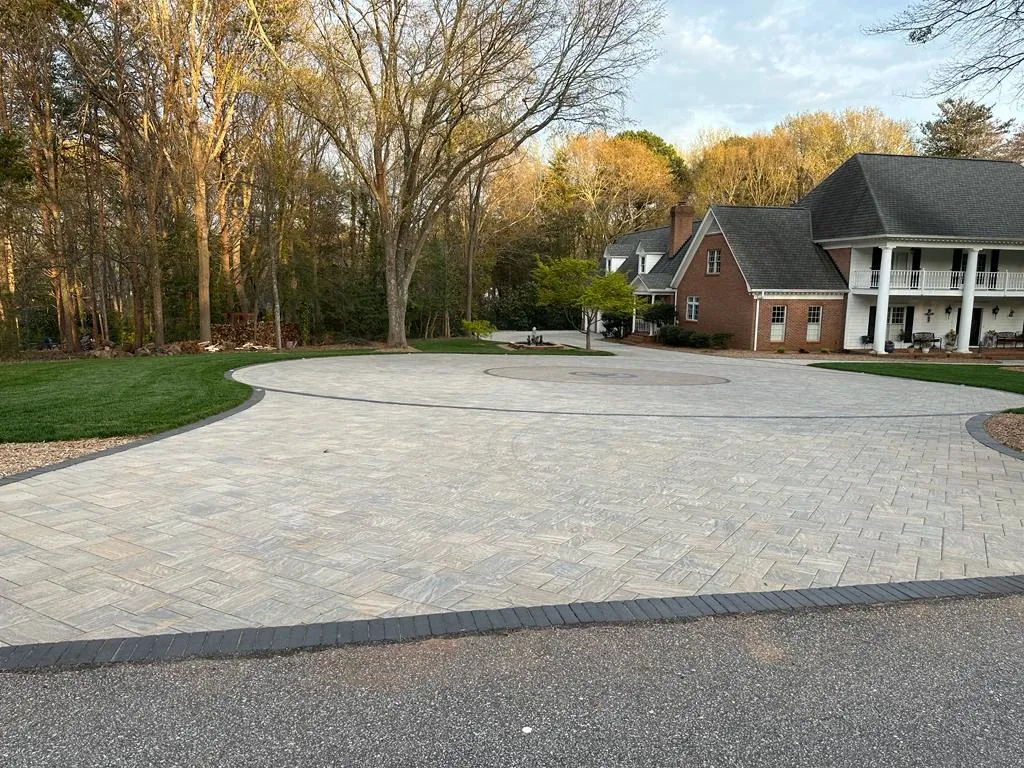
Pavers or Concrete? How to Choose the Right Fit for Your Project
September 1, 2026
Pavers and poured concrete can both perform well. The right choice comes down to how you'll use the space, your maintenance preferences, and your project's priorities.
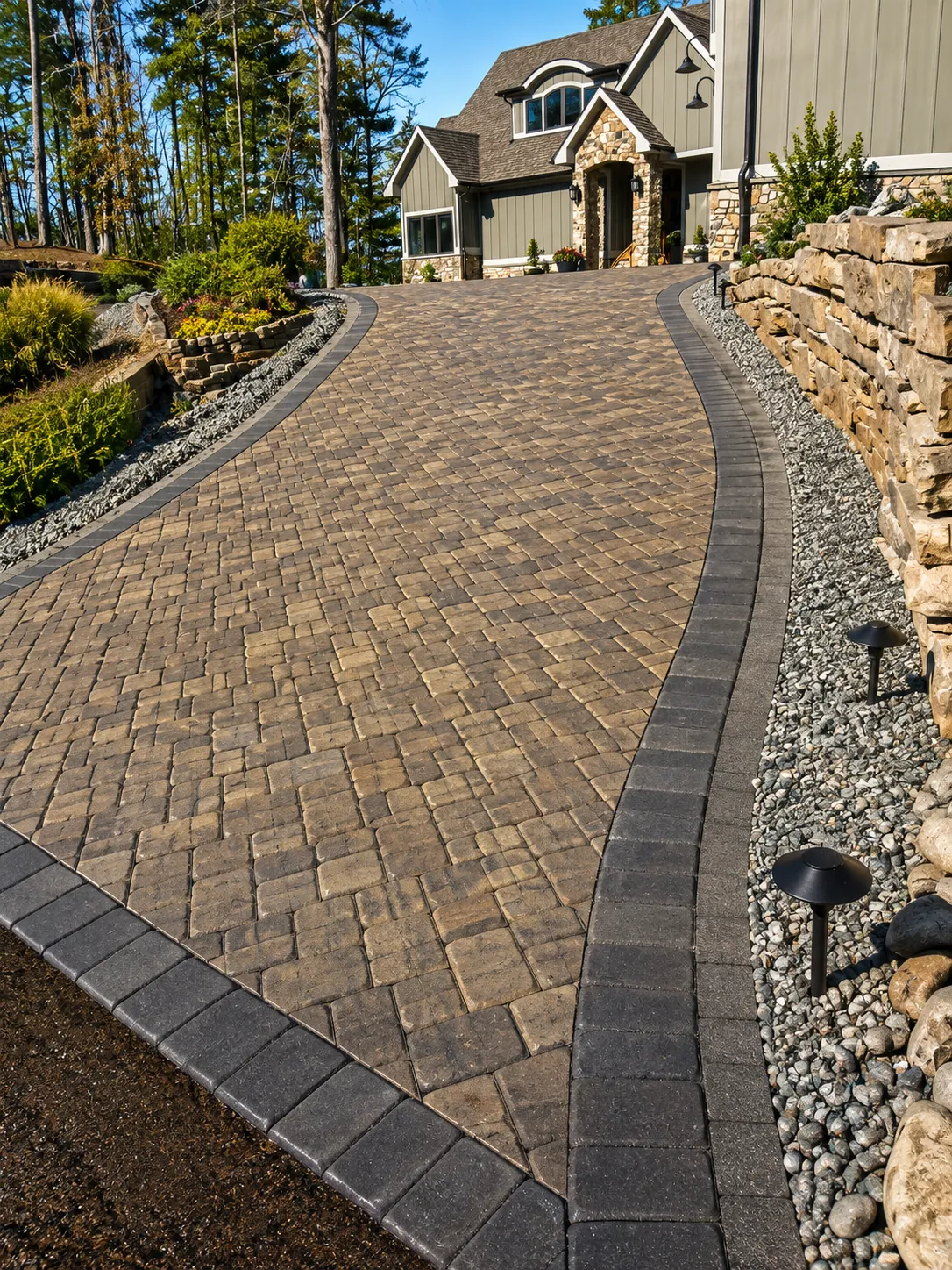
A Homeowner's Guide to Planning Driveways
August 8, 2026
Plan driveway paver installation Greenville SC homeowners can trust, from drainage and base prep to material choices, edges, and long-term care.
Ready to start your project?
Tell us about your space and we'll follow up to schedule a consultation.