
Materials & Cost
Paver Patios vs. Poured Concrete: What Actually Determines Long-Term Performance
The difference between a patio that holds its lines for years and one that shifts within a season usually isn't the surface material — it's what's underneath it.
By Innova Hardscapes and Landscapes · Published August 6, 2026
When homeowners ask us to compare paver patios to poured concrete, the conversation almost always starts in the wrong place: the surface. What actually separates a patio or driveway that holds up for years from one that starts shifting, cracking, or gapping within a season or two has less to do with the material on top and more to do with what happens before it ever gets installed — and how each system behaves once water gets involved.
Base preparation is the real variable
A patio is one of the most-used spaces we build, which means the excavation depth, the compacted aggregate base underneath it, and the edge restraint around it determine whether it stays flat and tight for years — or doesn’t. Skip or shortcut any of those three, and it doesn’t matter how good the surface material looks on installation day.
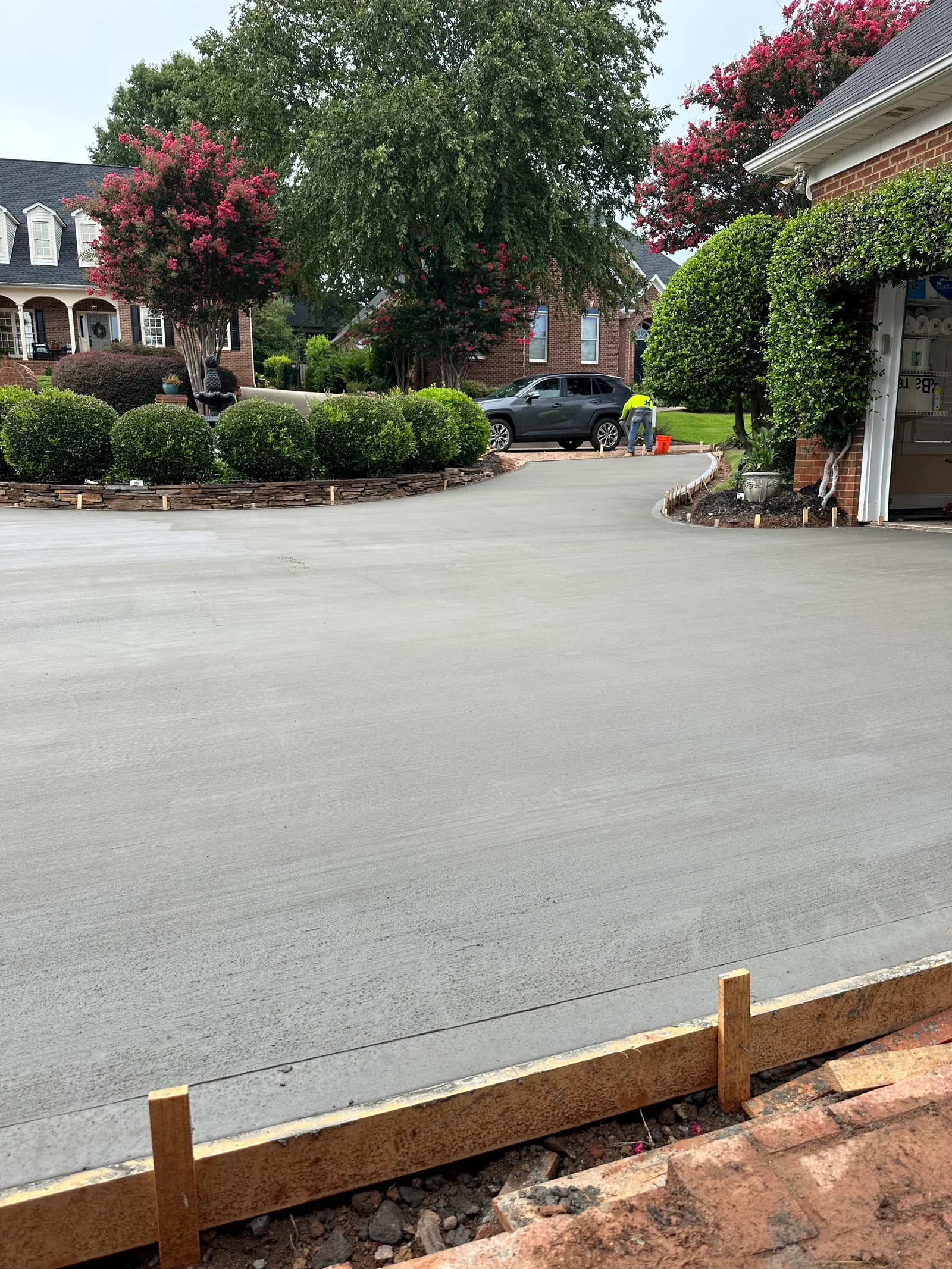
Driveways raise the stakes further. A driveway carries daily vehicle weight, which is a different structural demand than foot traffic on a patio. The base underneath a driveway gets engineered specifically for that load — it isn’t just a patio spec scaled up.
Where pavers and poured concrete actually differ
With a properly prepared base, the real-world difference between pavers and a single poured slab comes down to a few practical points:
- Repairability. A paver surface is built from individual units. If one section ever needs attention — a utility repair, a settling spot — that section can be addressed on its own rather than replacing an entire poured slab.
- Flexibility over time. Individual pavers can move slightly with the ground beneath them without the visible cracking a rigid poured slab shows under the same conditions.
- Joint behavior. Pavers rely on compacted joint sand — often polymeric sand — that lets the surface flex slightly and can be refreshed or replaced later. Poured concrete instead uses control joints cut or formed into the slab, which guide where the material is allowed to crack as it cures and moves. Neither approach prevents movement; they manage it differently.
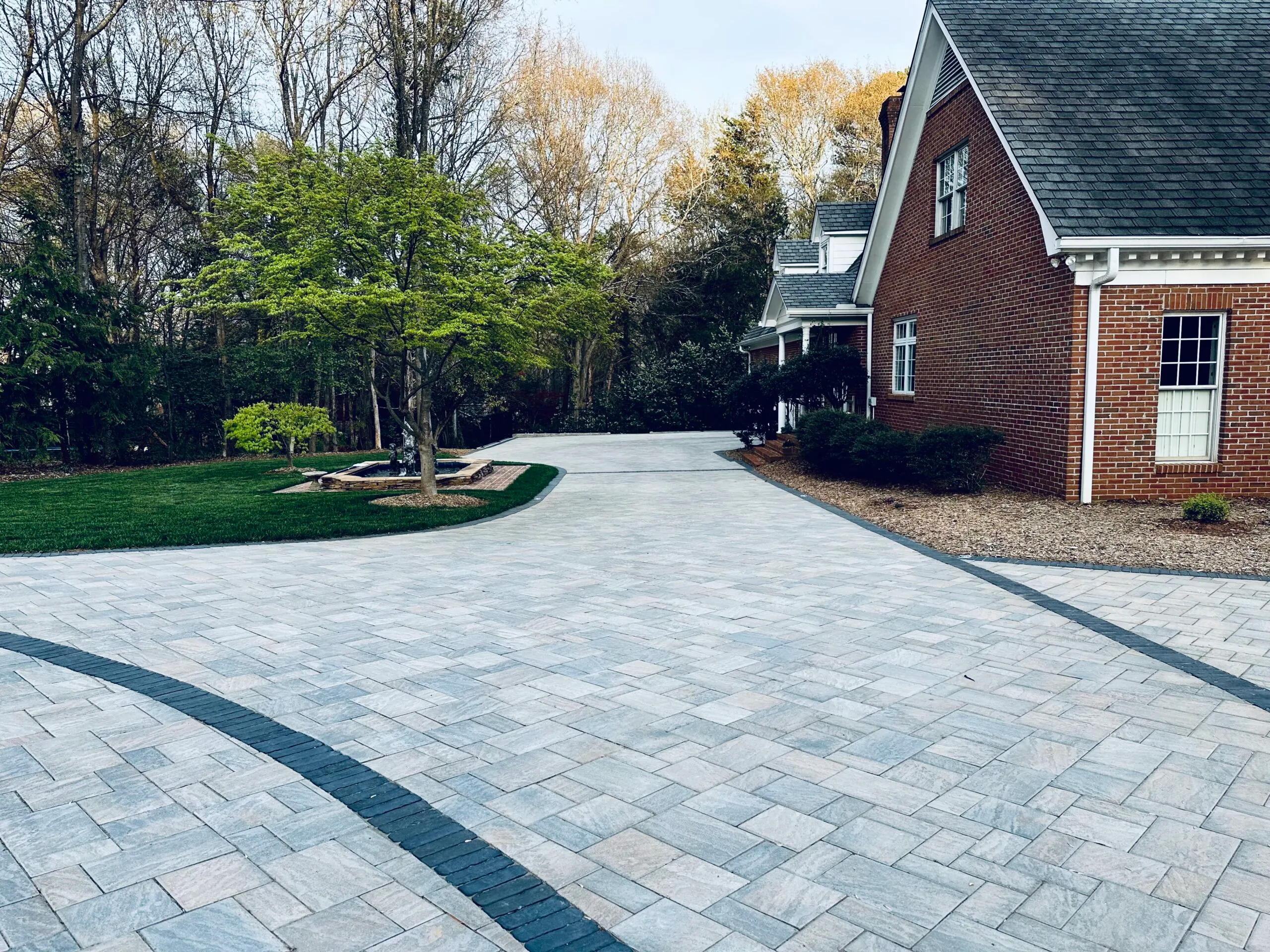
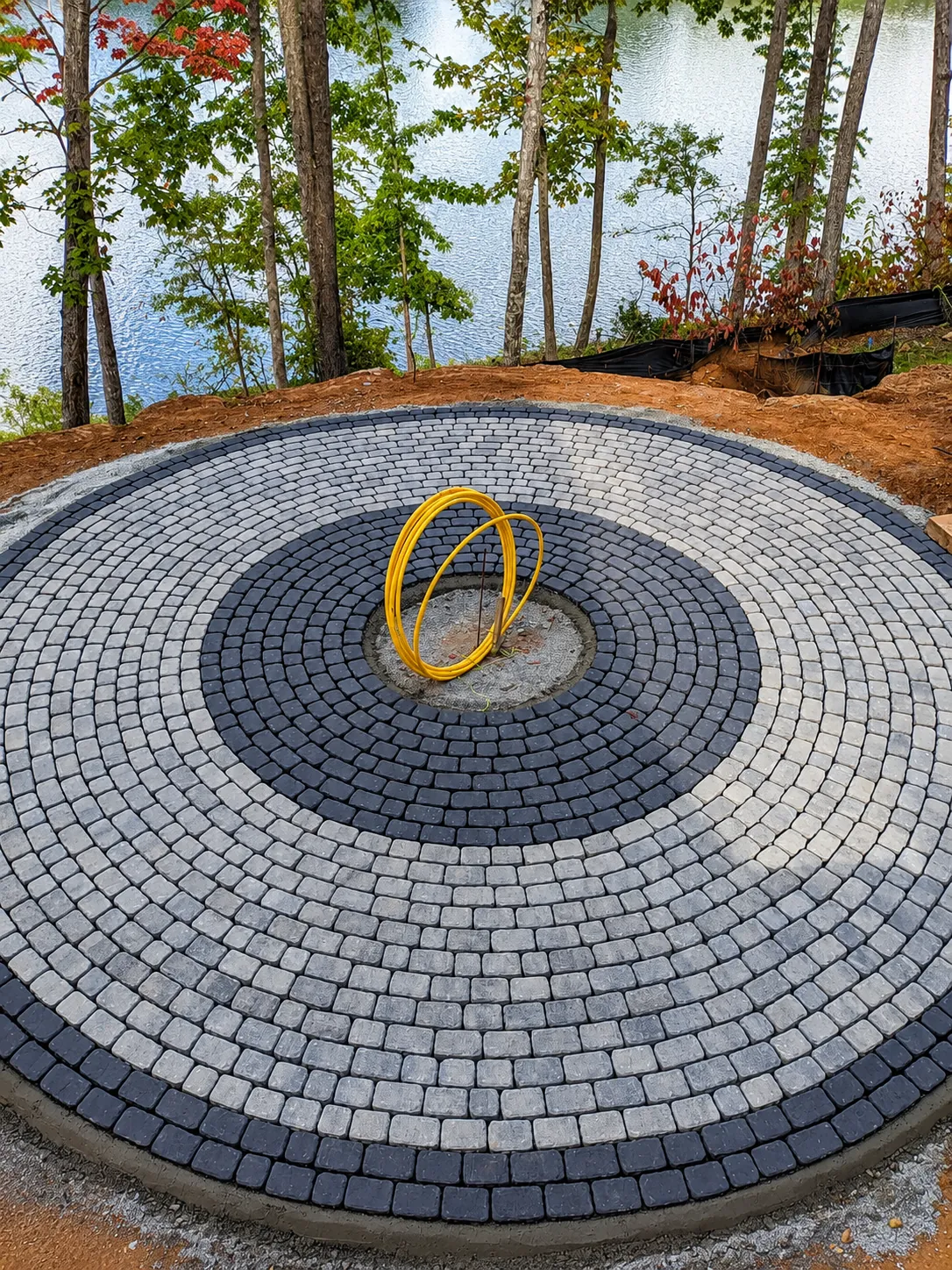
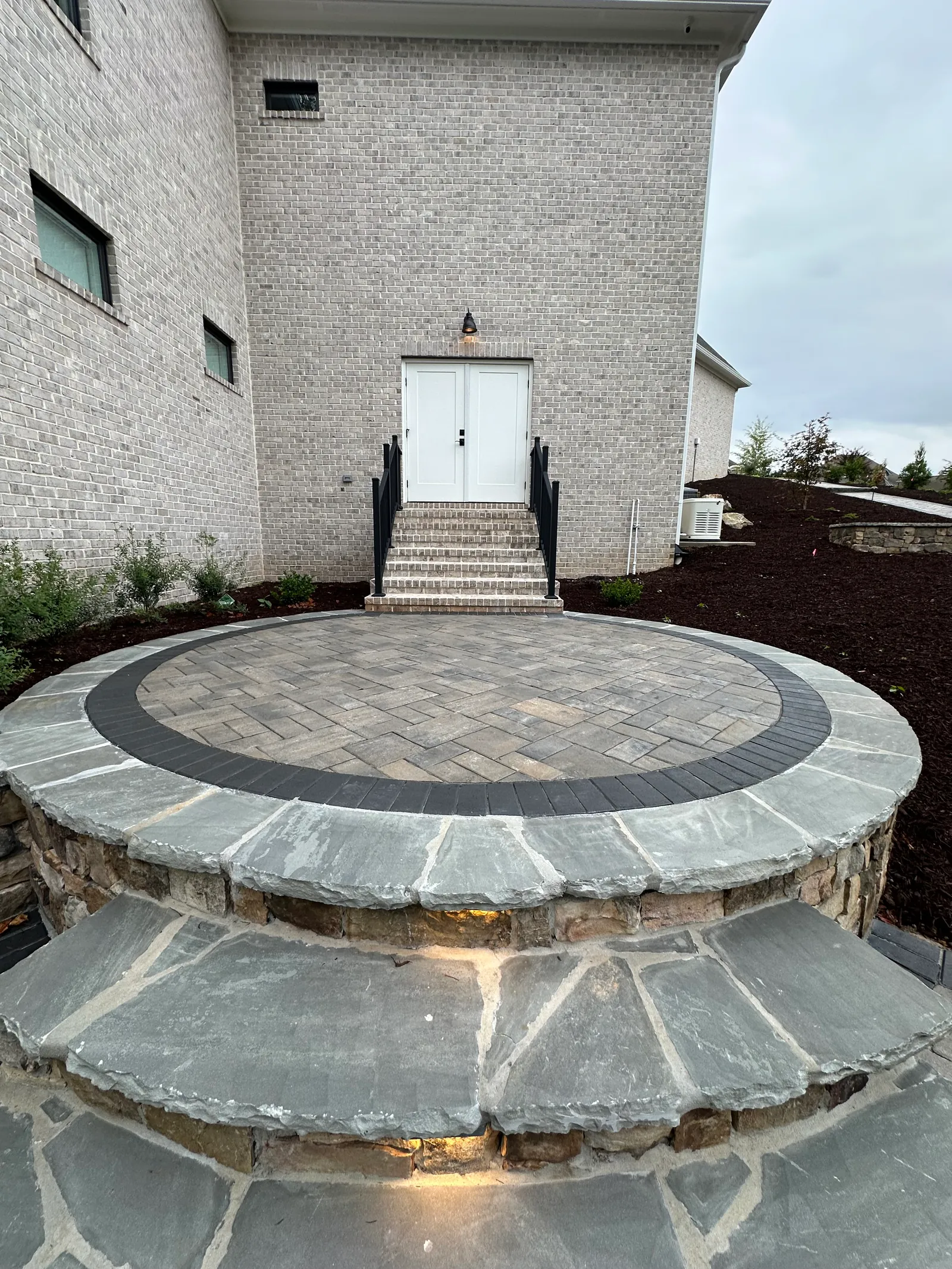
- Layout and detail options. Pavers open up choices poured concrete doesn’t — a circular motor court, a banding or border detail, a pattern that ties into the rest of the property’s hardscape.
Drainage and settlement are part of performance, not an afterthought
Water is usually the real threat to whatever is underneath the surface, not the surface itself. When a base isn’t graded to shed water away from the hardscape, moisture collects beneath it, softens the soil, and gives it room to move.
On a paver surface, that tends to show up gradually — a section settling slightly out of plane, a joint opening up — and because the surface is modular, the affected area can usually be lifted, corrected, and reset without disturbing the rest of the patio or driveway. On a poured slab, the same trapped water can undermine the base evenly enough that nothing looks wrong until a crack finally appears, at which point the fix is a patch, a section replacement, or living with a visible repair.
Neither material is naturally immune to a poor drainage plan. A well-graded base with a clear path for water to leave the area protects a paver installation and a poured slab about equally well; a shortcut on grading will eventually show up in either one.
What actually drives cost
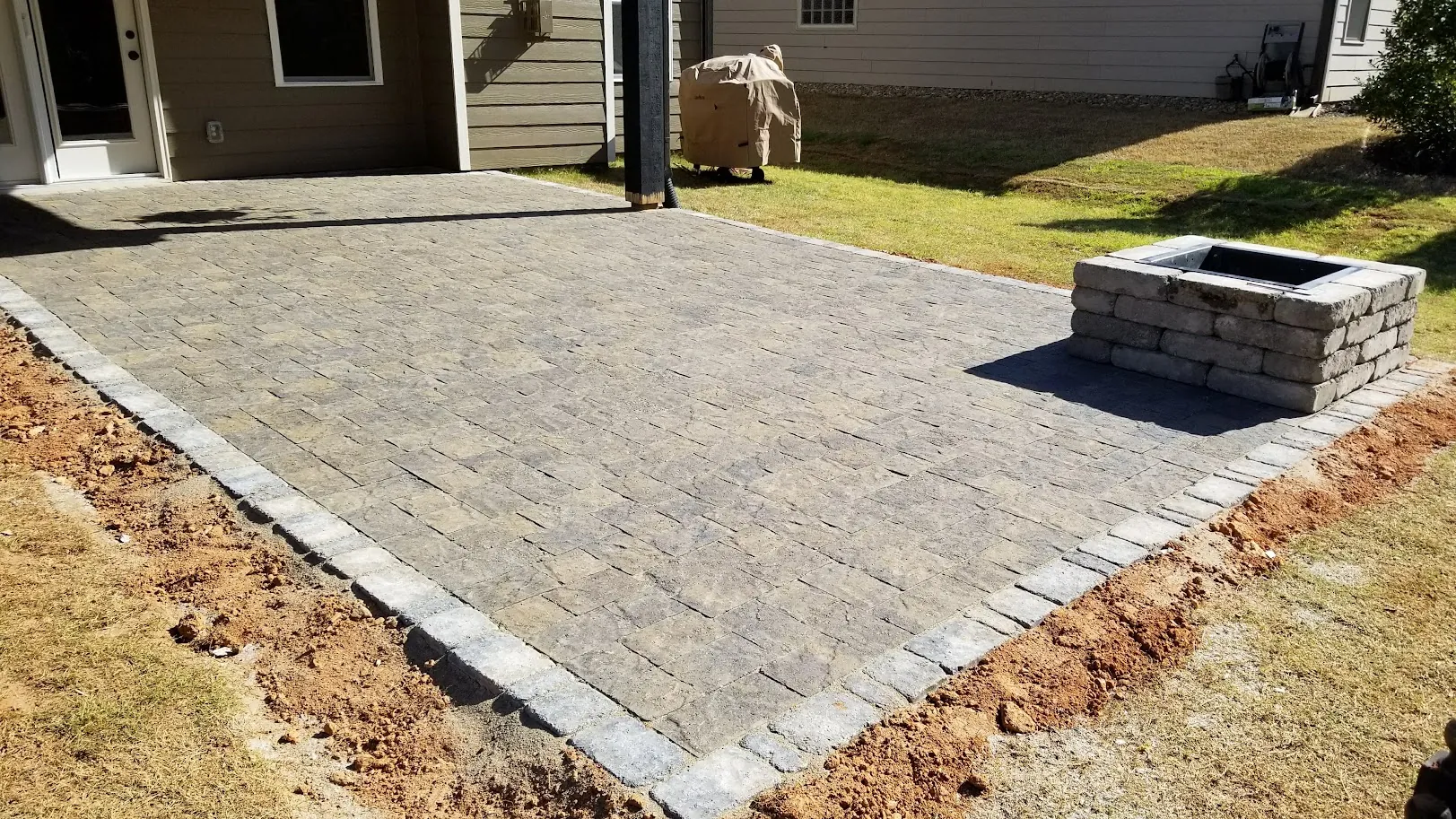
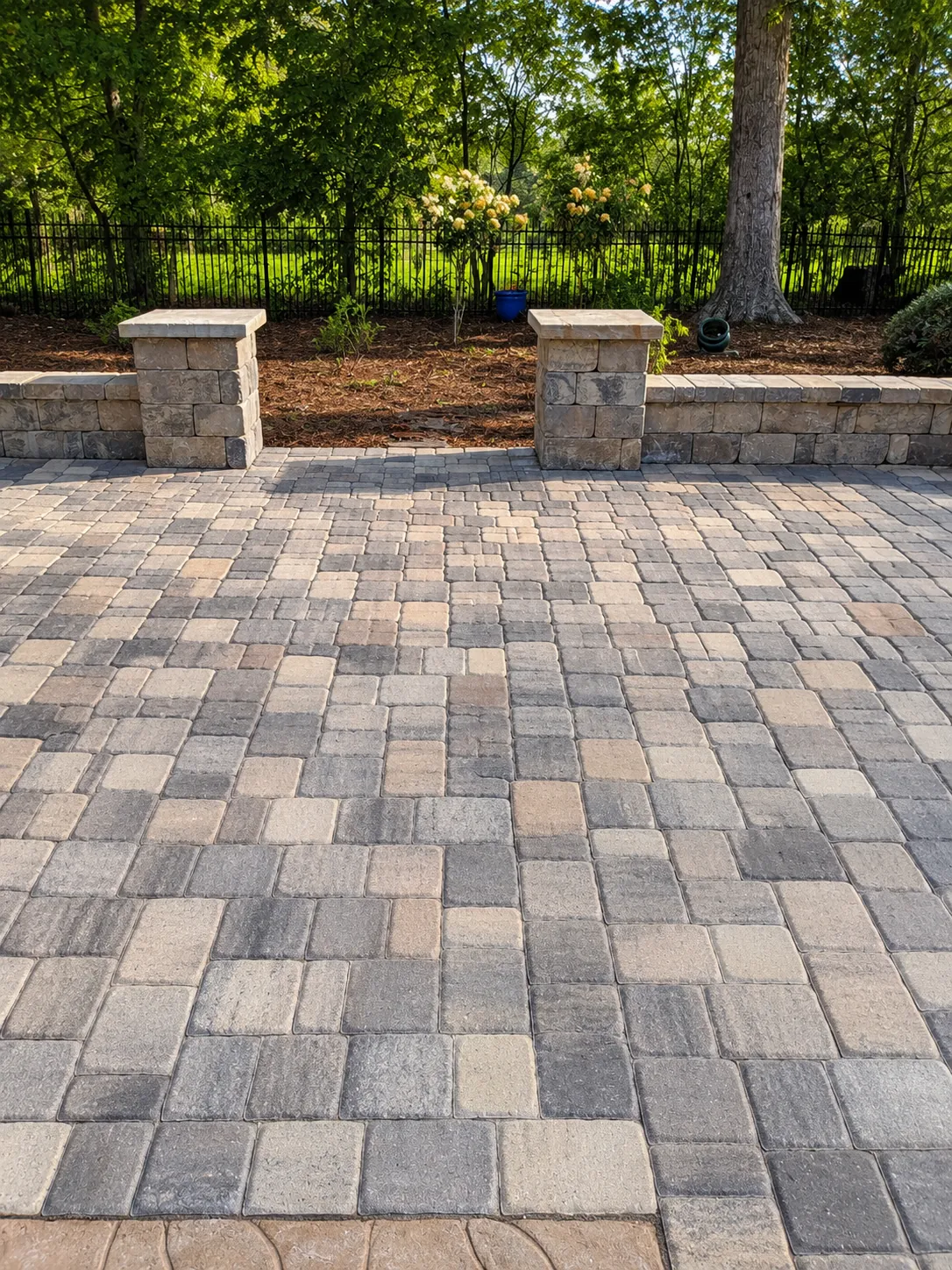
We’d rather not throw out a number that doesn’t hold up once we’ve actually seen a property, because the honest answer is that cost is driven by site conditions and scope, not the material alone. The biggest factors are usually excavation and base work (more grading, drainage correction, or site access difficulty means more labor before a single paver goes down), the total square footage and layout complexity, and any additional features — a fire pit, a seat wall, banding or medallion detail — built into the same space.
That’s why we start every project with a real site walk and a design conversation before any pricing conversation. See Landscape Design for how that first step works, or Request an Estimate to get a property-specific answer.
The bottom line
If you’re comparing patio or driveway materials, ask about the base and the drainage plan before you ask about the surface. A well-built paver patio and a well-built poured slab can both perform — but a shortcut on preparation will undermine either one, regardless of what’s on top.
If the more pressing question for your project is less about how these two systems hold up structurally and more about which one actually fits your yard, your maintenance preferences, and your budget priorities, our homeowner decision guide comparing pavers and concrete works through that side of the decision.
Related Articles
Best Patio Materials for Heat in Upstate SC
September 21, 2026
Compare the best patio materials for heat in Upstate SC, from travertine to concrete pavers, and plan a cooler, durable backyard surface for summer.
Patio Material Selection for Upstate SC Yards
September 5, 2026
Make patio material selection easier with clear guidance on pavers, concrete, stone, and porcelain for beautiful, durable Upstate South Carolina yards.
What Does Patio Installation Cost in Upstate SC?
August 30, 2026
What does patio installation cost in Upstate SC? See how materials, size, grading, access, and features affect the budget for a well lasting outdoor space.
Frequently Asked Questions
What's the difference between a patio and a paver patio?
Most of our patio work uses concrete pavers, though the right material depends on the property and your preferences — we'll talk through the options during design.
Does a paver surface need sealing?
Sealing helps protect a paver surface and joint sand from weather and daily wear. We offer brick paver cleaning & sealing as a maintenance service for both new and existing installations.
Ready to start your project?
Tell us about your space and we'll follow up to schedule a consultation.