
Materials & Cost
Patio Material Selection for Upstate SC Yards
Make patio material selection easier with clear guidance on pavers, concrete, stone, and porcelain for beautiful, durable Upstate South Carolina yards.
By Innova Hardscapes and Landscapes · Published September 5, 2026
A patio should do more than fill an empty spot behind the house. It should make the backyard easier to use, whether that means hosting a cookout in Greer, creating a quiet coffee spot in Travelers Rest, or extending a pool area in Simpsonville. Smart patio material selection is what turns that vision into a finished space that feels right underfoot, holds up to the weather, and suits the character of your home.
For homeowners across Upstate South Carolina, the best choice is rarely about picking the most expensive material or copying a photo online. The right patio depends on drainage, sun exposure, how the space will be used, the surrounding landscape, and the level of maintenance you want years from now.
Start With How You Want to Use the Patio
A patio designed for a small bistro table has different demands than one built around an outdoor kitchen, fireplace, or pool. Before comparing colors and textures, picture an ordinary Saturday at home. Are kids moving between the lawn and the patio? Do you want room for a dining table, grill, and lounge seating? Will guests gather around a firepit after sunset?
The answers affect both the size of the patio and the surface that makes sense. A formal entertaining area may call for a refined stone look or large-format porcelain. A flexible family space often benefits from pavers that are durable, repairable, and comfortable for everyday use. Around pools, slip resistance and heat retention deserve more attention than appearance alone.
It also helps to think beyond the patio edge. The material should work with walkways, retaining walls, garden beds, turf, and the architecture of the house. A well-planned hardscape creates definition without making the yard feel overly paved or disconnected from its greenery.
The Main Patio Material Options
Concrete pavers: flexible, durable, and customizable
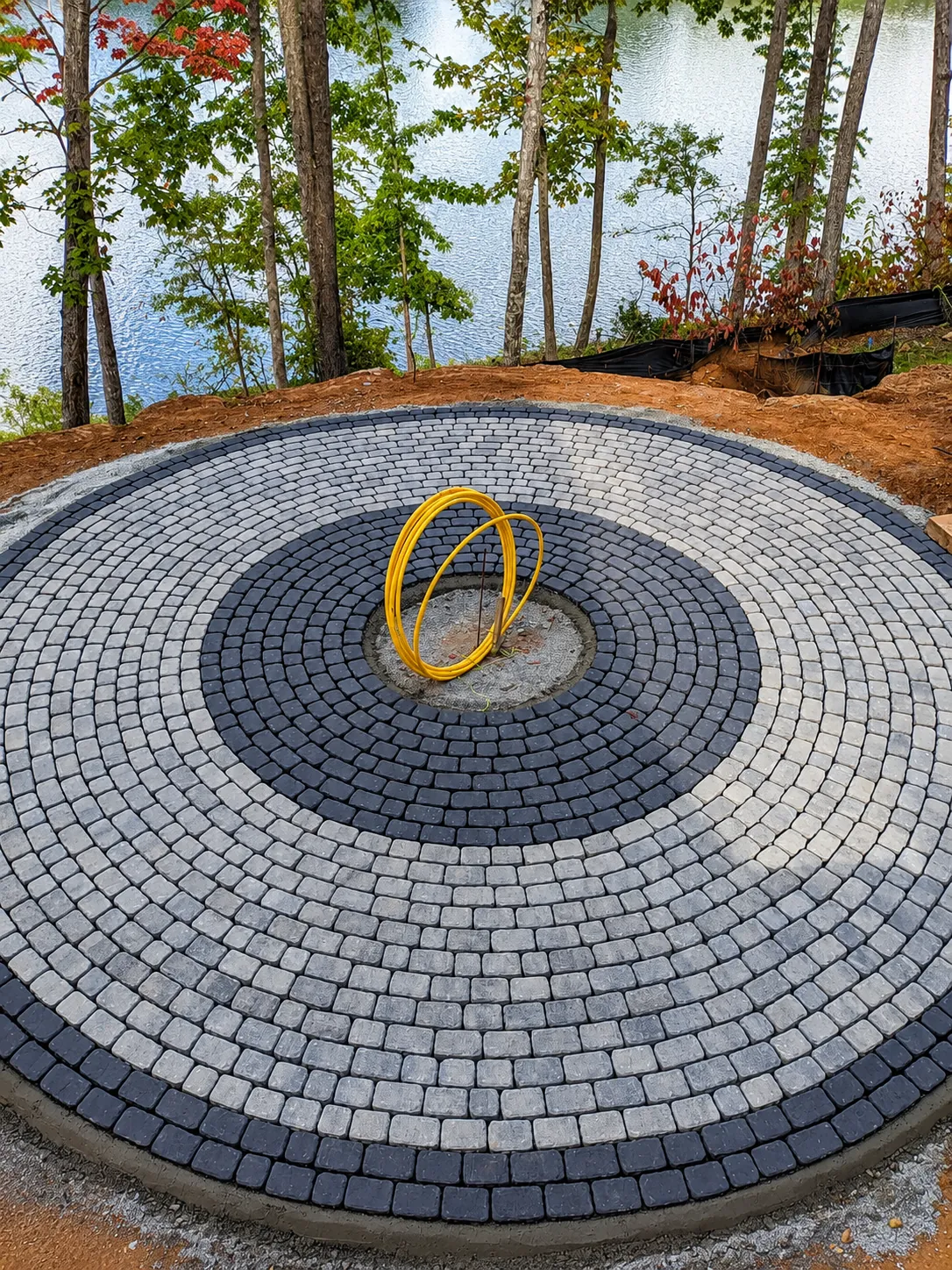
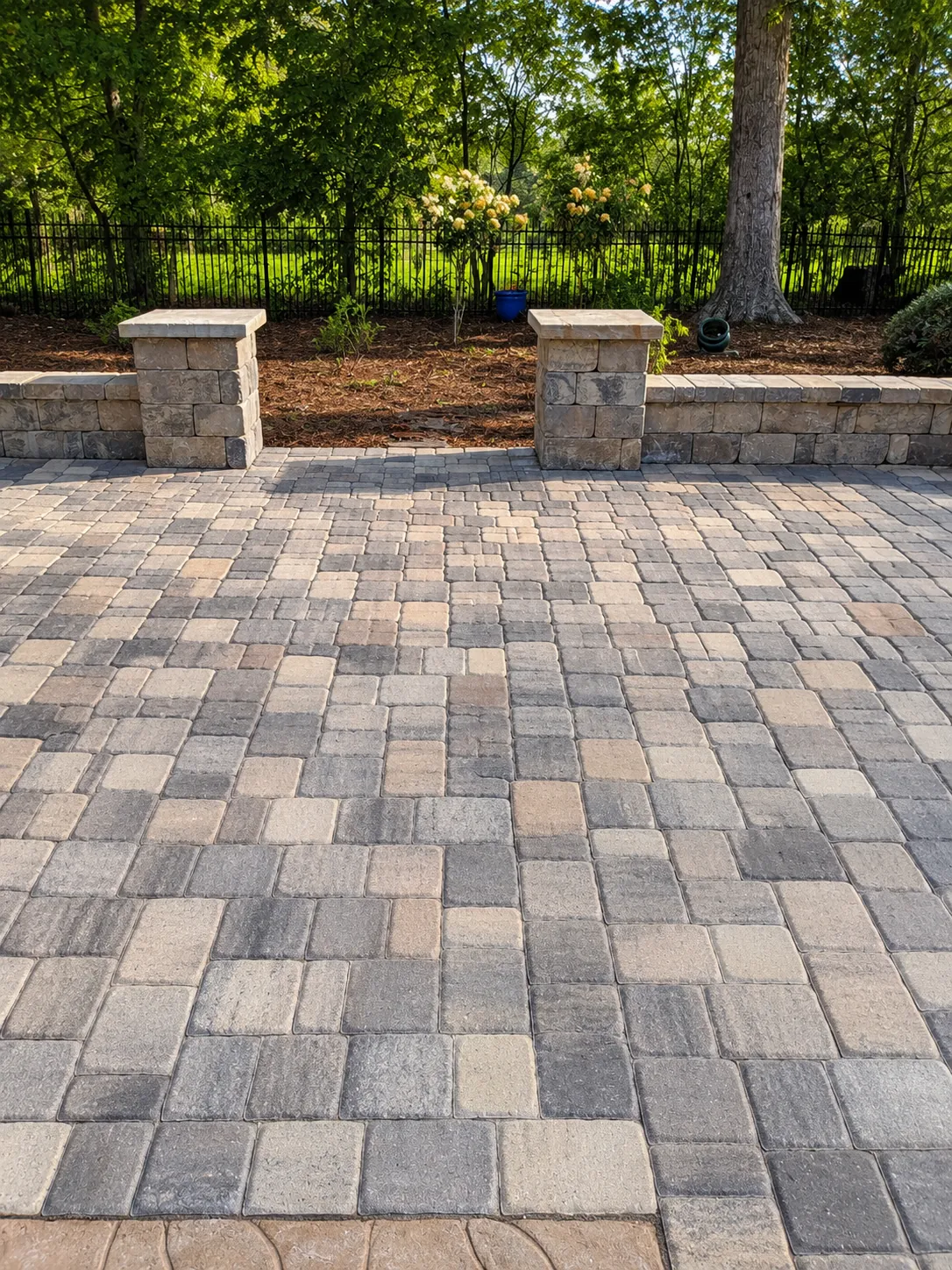
Concrete pavers are a popular choice for Upstate SC homes because they offer a broad range of styles at a practical price point. They can resemble brick, natural stone, or clean contemporary slabs, with patterns and border details that give a patio a custom-built appearance.
Pavers are individual units installed over a prepared aggregate base. That construction is valuable in our region, where heavy rain and changing ground conditions can test a patio over time. If settling or damage occurs, individual pavers can often be lifted, the base corrected, and the surface restored without replacing the entire patio.
The trade-off is that quality preparation matters greatly. A paver patio is only as dependable as its excavation, base compaction, edge restraint, and drainage plan. Joint sand may also need occasional maintenance, especially where weeds, ants, or frequent runoff are concerns.
Natural stone: distinctive character and lasting appeal
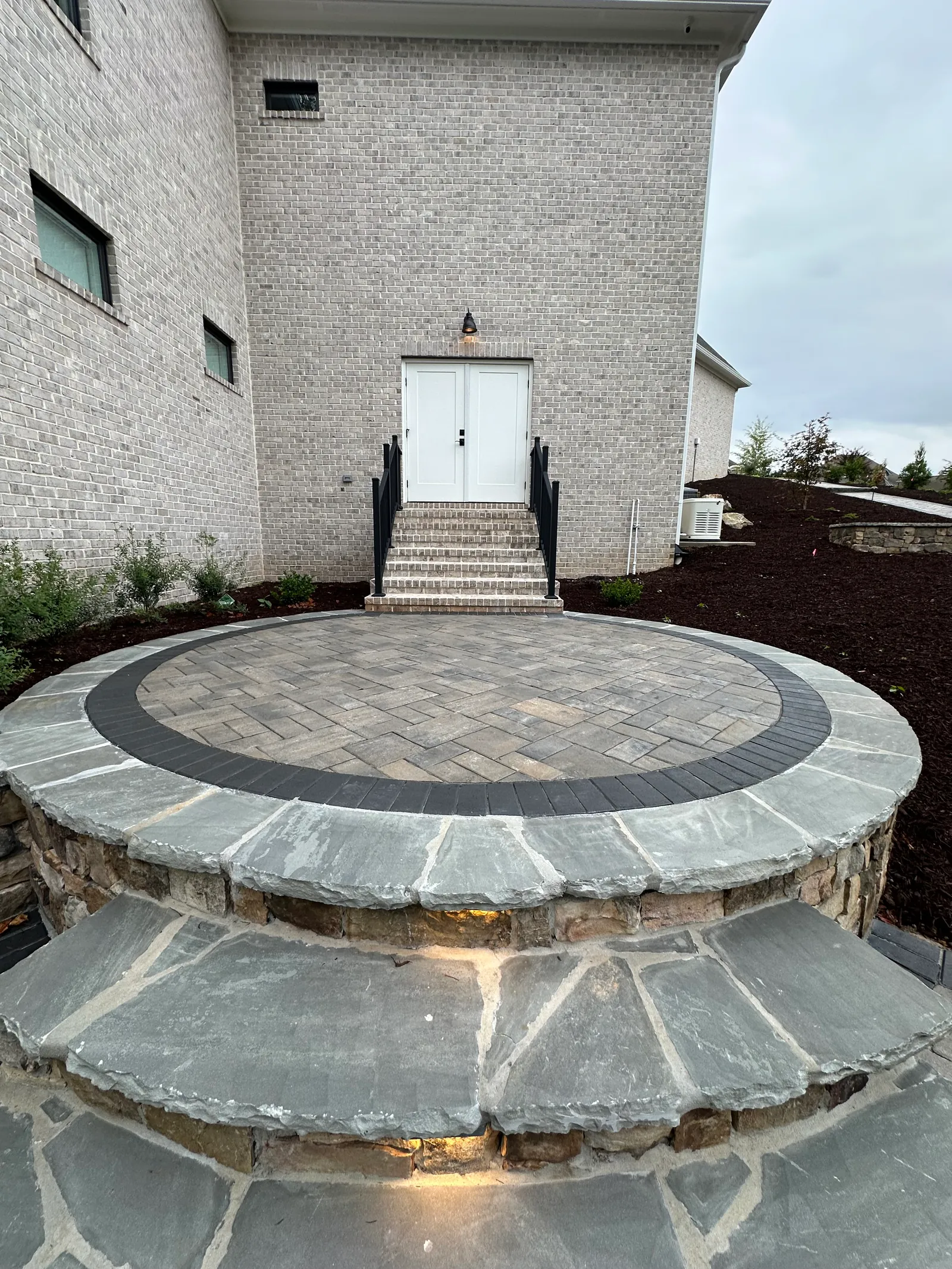
Flagstone, bluestone, and similar natural materials bring variation that manufactured products cannot fully replicate. Each piece has its own color movement, texture, and shape, making stone a strong fit for homes with wooded lots, established gardens, traditional architecture, or a more organic landscape design.
Natural stone can be installed in irregular patterns for a relaxed, garden-inspired feel or cut into more uniform shapes for a tailored appearance. It pairs particularly well with stone steps, seat walls, fire features, and planted borders.
However, natural stone is not one uniform category. Some varieties are more porous, some have cleft surfaces that collect debris, and some may require sealing to help resist stains or weathering. Material availability and labor can also place stone at a higher investment level than concrete pavers. It is a beautiful choice when its character fits the property and the homeowner is comfortable with natural variation.
Poured concrete: clean lines and broad coverage
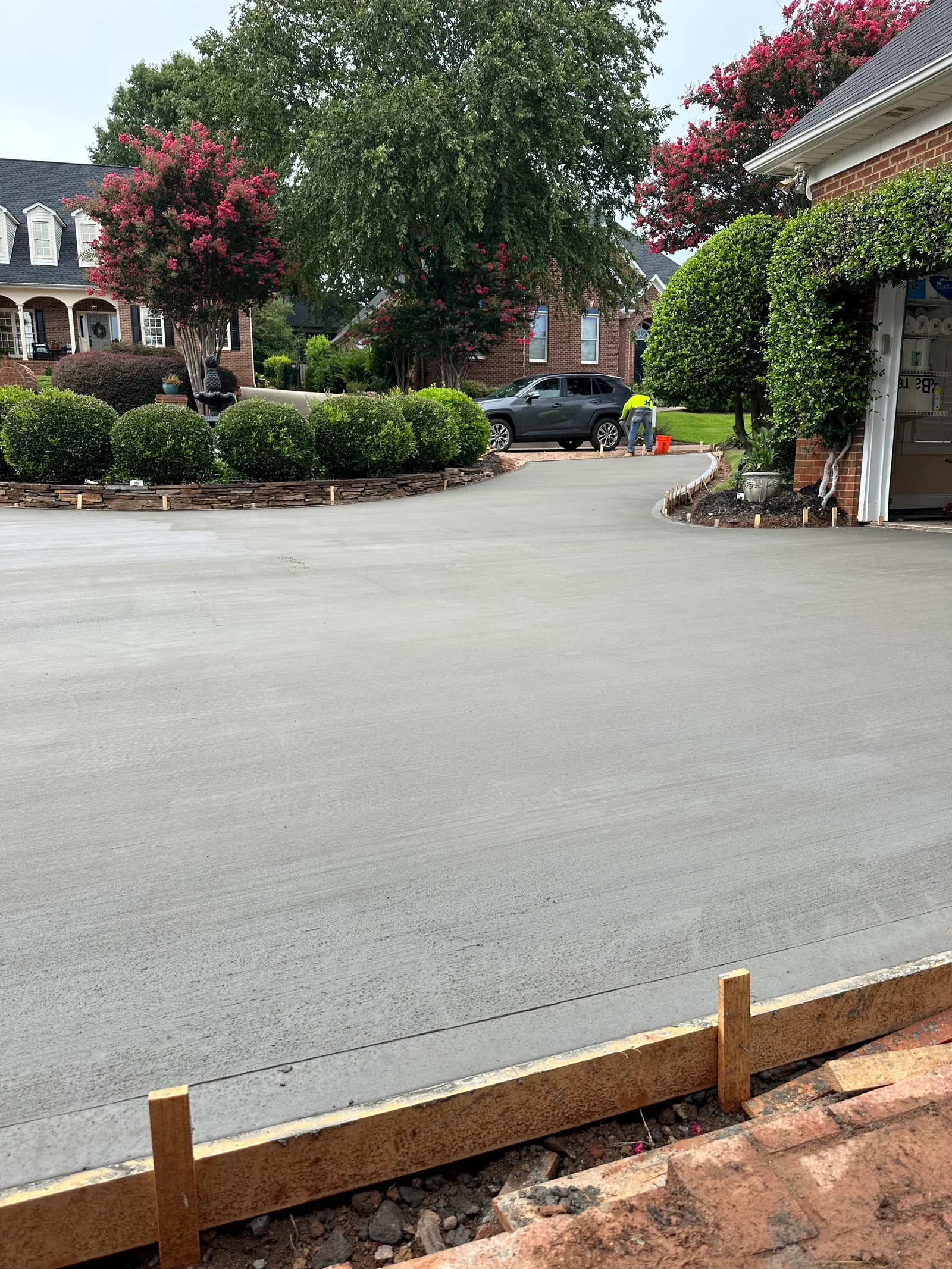
Poured concrete remains a practical patio material for large spaces, modern designs, and projects where a smooth, continuous surface is preferred. It can be broom-finished for traction, stained for color, or finished with decorative texture. For a simple patio behind the home, properly installed concrete can provide a clean and useful foundation for outdoor living.
The main consideration is cracking. Concrete naturally moves and can develop cracks as it cures and responds to soil conditions, temperature changes, and moisture. Control joints help direct those cracks, but they do not eliminate the possibility. A skilled installation includes the proper base, reinforcement where appropriate, joint placement, and drainage slope to manage those realities.
Concrete can be an excellent fit, especially when the design calls for an expansive surface. Homeowners should simply choose it with realistic expectations and avoid assuming it will remain perfectly unmarked forever.
Porcelain pavers: polished style with practical benefits
Porcelain pavers offer a refined look for homeowners who want crisp lines, consistent color, and a surface that resists fading, staining, and moisture absorption. Many options mimic natural stone, wood, or concrete while providing a more uniform finish.
This material can work especially well for contemporary homes, covered patios, and poolside settings when an appropriate slip-resistant product is selected. Porcelain also tends to be easy to clean, which is appealing near outdoor kitchens and dining areas.
Installation requires experience because porcelain is hard, precise cutting is needed, and the system beneath it must be designed for the installation method. It may cost more upfront than standard concrete pavers, but its low-maintenance finish can be worthwhile for the right project.
Brick: warmth that complements established homes
Brick patios have a timeless quality that fits many traditional homes throughout Greenville, Anderson, and surrounding communities. Their warm color and smaller scale create a welcoming surface for courtyards, garden paths, front entries, and intimate gathering spaces.
Brick can be laid in herringbone, basketweave, running bond, and other patterns that add visual interest without overwhelming the landscape. Like concrete pavers, brick units can be repaired individually when installed on a proper base.
Color variation and occasional surface wear are part of brick’s appeal, but not every brick is suitable for a patio. Outdoor-rated material and correct installation make the difference between a surface that ages gracefully and one that deteriorates too quickly.
Match the Material to Upstate South Carolina Conditions
Upstate South Carolina patios deal with humid summers, heavy thunderstorms, leaf debris, clay soils, and occasional freezes. Those conditions do not limit your options, but they make site preparation essential.
Drainage should be addressed before the first paver or stone is placed. Water needs a planned path away from the home, not a path across the patio or into a low spot beside it. On sloped properties common in areas such as Taylors, grading, retaining elements, or drainage solutions may be part of a durable patio design.
Sun exposure also matters. Dark materials can become hot in full afternoon sun, particularly around a pool. Highly textured stone may be attractive but can be less convenient for moving furniture or sweeping pollen and leaves. A lighter paver or porcelain surface may feel more comfortable in an exposed backyard, while a shaded patio may benefit from a material chosen for traction and easy cleaning.
Design Details That Change the Finished Result
The patio field material gets the attention, but borders, patterns, transitions, and edges often create the polished result homeowners notice most. A contrasting paver border can frame a dining space. A soldier-course brick edge can give a patio a finished perimeter. A gradual transition into planting beds helps the hardscape feel integrated rather than dropped into the yard.
Scale matters as well. Large-format pavers can make a compact patio feel less busy, while smaller pavers or brick may better suit a detailed garden setting. The goal is not to make every element match exactly. It is to create a coordinated outdoor environment where the patio, home exterior, and landscape all belong together.
Balance Initial Cost With Long-Term Value
Every patio material comes with an initial installation cost and a long-term ownership cost. Concrete may offer a lower starting investment for some designs, while pavers can provide easier future repairs. Natural stone may require a greater upfront budget but deliver a one-of-a-kind appearance that remains appealing for decades. Porcelain can reduce maintenance demands while requiring more specialized installation.
The least expensive material is not always the best value if it does not fit the property or requires a compromise on drainage, layout, or usable space. It is usually wiser to build the patio you can properly prepare and finish than to select a premium surface over an inadequate base.
A thoughtful contractor will discuss those trade-offs clearly, recommend materials that fit your goals, and plan the details that protect your investment. Innova Hardscapes and Landscapes helps homeowners across Upstate SC bring those decisions together into outdoor spaces that feel finished, functional, and made for the way they live.
Related Services
Patios
Durable, precisely-laid patios built on a proper base — the difference shows up years later, not on day one.
Drainage Solutions
Solves standing water and erosion issues before they damage anything else on the property.
Landscape Design
Thoughtful planning that considers how you’ll actually use the space, not just how it photographs.
Related Articles
Best Patio Materials for Heat in Upstate SC
September 21, 2026
Compare the best patio materials for heat in Upstate SC, from travertine to concrete pavers, and plan a cooler, durable backyard surface for summer.
What Does Patio Installation Cost in Upstate SC?
August 30, 2026
What does patio installation cost in Upstate SC? See how materials, size, grading, access, and features affect the budget for a well lasting outdoor space.
Paver Patios vs. Poured Concrete: What Actually Determines Long-Term Performance
August 6, 2026
The difference between a patio that holds its lines for years and one that shifts within a season usually isn't the surface material — it's what's underneath it.
Ready to start your project?
Tell us about your space and we'll follow up to schedule a consultation.