
Design Tips
9 Backyard Drainage Problem Signs to Catch
Learn the backyard drainage problem signs that can damage lawns, patios, and foundations, plus practical steps for protecting your Upstate SC property.
By Innova Hardscapes and Landscapes · Published August 24, 2026
A backyard can look perfectly healthy on a dry afternoon and still be struggling underneath. In Upstate South Carolina, heavy rain, red clay soil, sloped lots, and sudden downpours can send water toward the wrong places fast. Knowing the backyard drainage problem signs early gives homeowners a chance to protect their lawn, garden beds, patio, and foundation before a wet-weather nuisance becomes an expensive repair.
Drainage is not just about getting rid of standing water. A well-planned yard directs runoff safely, preserves usable outdoor space, and supports the long-term performance of hardscape features. The right solution depends on where water starts, where it travels, and what it is affecting along the way.
9 Backyard Drainage Problem Signs Homeowners Should Watch For
1. Water remains in the yard long after rain stops
A puddle that disappears shortly after a storm is not always a concern. Water that remains for a day or more deserves attention, especially when it returns in the same spot after every rain. Low areas may simply need regrading, while compacted soil can prevent water from soaking in as it should.
Standing water also makes a lawn harder to enjoy. It creates muddy foot traffic, weakens turf, and can turn a space intended for children, pets, or entertaining into an area everyone avoids.
2. Your lawn has muddy, bare, or thinning patches
Grass needs moisture, but saturated roots cannot access enough oxygen. That is why persistently wet areas often develop thin turf, yellowing grass, moss, or bare mud. Homeowners sometimes respond by adding seed or sod, only to watch the same problem return because the soil conditions never changed.
In many Upstate SC yards, clay-heavy soil adds another layer to the issue. Clay can hold water near the surface, particularly after periods of repeated rain. Improving drainage before repairing the lawn gives new grass a better chance of taking hold.
3. Water flows toward the house
Runoff moving toward the foundation is one of the most serious backyard drainage problem signs. It may show up as a shallow stream along the rear wall during rain, mulch washed against the house, or damp soil that never seems to dry near the foundation.
Water should slope away from the home. When it does not, moisture can contribute to foundation settlement concerns, crawl space dampness, mildew, and damage to siding or trim. The fix may involve reshaping the grade, extending downspouts, installing a drainage system, or combining several measures. A quick surface patch is not always enough if the overall grade is working against the property.
4. Mulch, gravel, or soil keeps washing out of beds
A neatly edged planting bed should not lose its mulch every time a storm rolls through. If mulch gathers on the lawn, gravel moves across a walkway, or soil washes out around shrubs, concentrated runoff is likely cutting through the landscape.
This is more than a cleanup problem. Erosion can expose plant roots, undermine edging, and leave planting beds looking unfinished. Thoughtful grading, stone borders, properly placed drains, and plant selections suited to the location can help stabilize the area without sacrificing its appearance.
5. You see channels, ruts, or exposed roots
Small grooves in a slope can become deeper washouts over time. These channels are evidence that water has found a fast route downhill, carrying soil with it. On a sloped lot in areas such as Travelers Rest, Greer or Easley, the volume and speed of runoff may be substantial during a strong storm.
Exposed roots, leaning landscape timbers, and sinking sections of yard can point to the same problem. Slopes need a drainage plan that slows, guides, or captures water rather than allowing it to carve its own path through the property.
6. Patio pavers shift, settle, or collect water
A patio, pool deck, or paver walkway should feel stable underfoot and drain cleanly after rain. If pavers are rocking, joints are opening, or one section is sinking, water may be affecting the base beneath the surface. Water that pools on the patio can also create slippery conditions and leave staining or debris behind.
Hardscapes require careful base preparation and intentional drainage. In some cases, the issue is a simple adjustment to the surrounding grade. In others, the patio may need repairs along with a drainage solution that prevents the same movement from happening again. Addressing only the visible pavers without correcting the water path can sometimes lead to repeat repairs. One clue worth noting, though not a definitive diagnosis on its own: whether it’s one isolated paver or an entire section moving together tends to point a contractor toward different likely causes, and it’s a useful detail to mention when describing the problem.
7. Downspouts dump water beside the home or patio
Roof runoff is easy to overlook because it is only dramatic when rain is falling. Yet a single downspout can release a surprising amount of water beside a foundation, driveway, planting bed, or patio. A splash block may help in a small, open area, but it may not be enough where the ground slopes back toward the house or where runoff crosses a finished outdoor space.
Look for trenches in mulch, wet corners near the foundation, and soil splashing onto siding. Properly routed downspout extensions, buried drain lines, or catch basins can move roof water to a safer discharge area. The best approach must account for property lines, slope, and where water can legally and practically drain.
8. Mosquitoes gather around one wet area
Mosquito activity alone does not prove a drainage issue, but a consistently wet corner of the yard can give them a place to breed. If one section stays soggy while the rest of the yard dries, inspect it after rain. It may be a low point, a blocked outlet, a leaking irrigation component, or a downspout discharge area.
Correcting the source makes the yard more comfortable and often improves the health of nearby lawn and plants. It is a practical quality-of-life improvement, especially for families who want to use their backyard in the evening.
9. A musty crawl space or damp basement appears after storms
Indoor clues can begin outside. Musty odors, damp crawl space insulation, visible moisture on foundation walls, or increased humidity after rain may indicate that water is collecting near the home. These signs call for prompt investigation, since drainage, gutters, grading, and foundation conditions often overlap.
Not every moisture issue begins with the backyard, and not every drainage correction requires major excavation. Still, waiting for the problem to become obvious can allow moisture damage to spread. A professional assessment can identify whether the source is roof runoff, surface grading, underground water, plumbing, or a combination.
One Sign, or Several at Once?
A single sign in isolation — one damp corner, one shifted paver — often just needs monitoring or a small correction. The signs above become more urgent together than alone. Standing water near the foundation and a soggy lawn patch and washing mulch beds often share one cause upstream, even though they look like three separate problems. Before treating each symptom individually, it’s worth stepping back and asking whether they trace back to the same source — a single downspout, one persistent low point, or one section of grade working against the rest of the yard. For the fuller picture of how grading, collection, conveyance, and discharge fit together as one system, see our landscape drainage guide.
New construction and recent hardscape additions are also worth a second look specifically. A new patio, driveway addition, retaining wall, or expanded garden bed can quietly redirect water toward an area that never had a problem before, simply because it changed where water used to go.
What to Do Before Choosing a Drainage Solution
Start by observing the yard during and after a steady rain. Note where roof water lands, where puddles form, which direction runoff travels, and whether water reaches the home, a neighbor’s property, or a finished hardscape area. Photos and short videos can be especially useful because they show the actual water path rather than a dry-day guess.
Avoid assuming that every wet spot needs a French drain. French drains can be effective, but they are not a universal answer. A shallow swale may be better for broad surface runoff. Regrading can solve a low spot. Catch basins can collect concentrated flow from hardscape areas, while downspout extensions may correct a localized problem. On more complex properties, several elements may work together.
Also be cautious about adding soil against the home to eliminate a dip. Raising the grade too high can create moisture and clearance issues around siding, brick, doors, and vents. Drainage improvements should protect the structure while preserving appropriate slopes and finished elevations.
Build a Backyard That Drains as Beautifully as It Looks
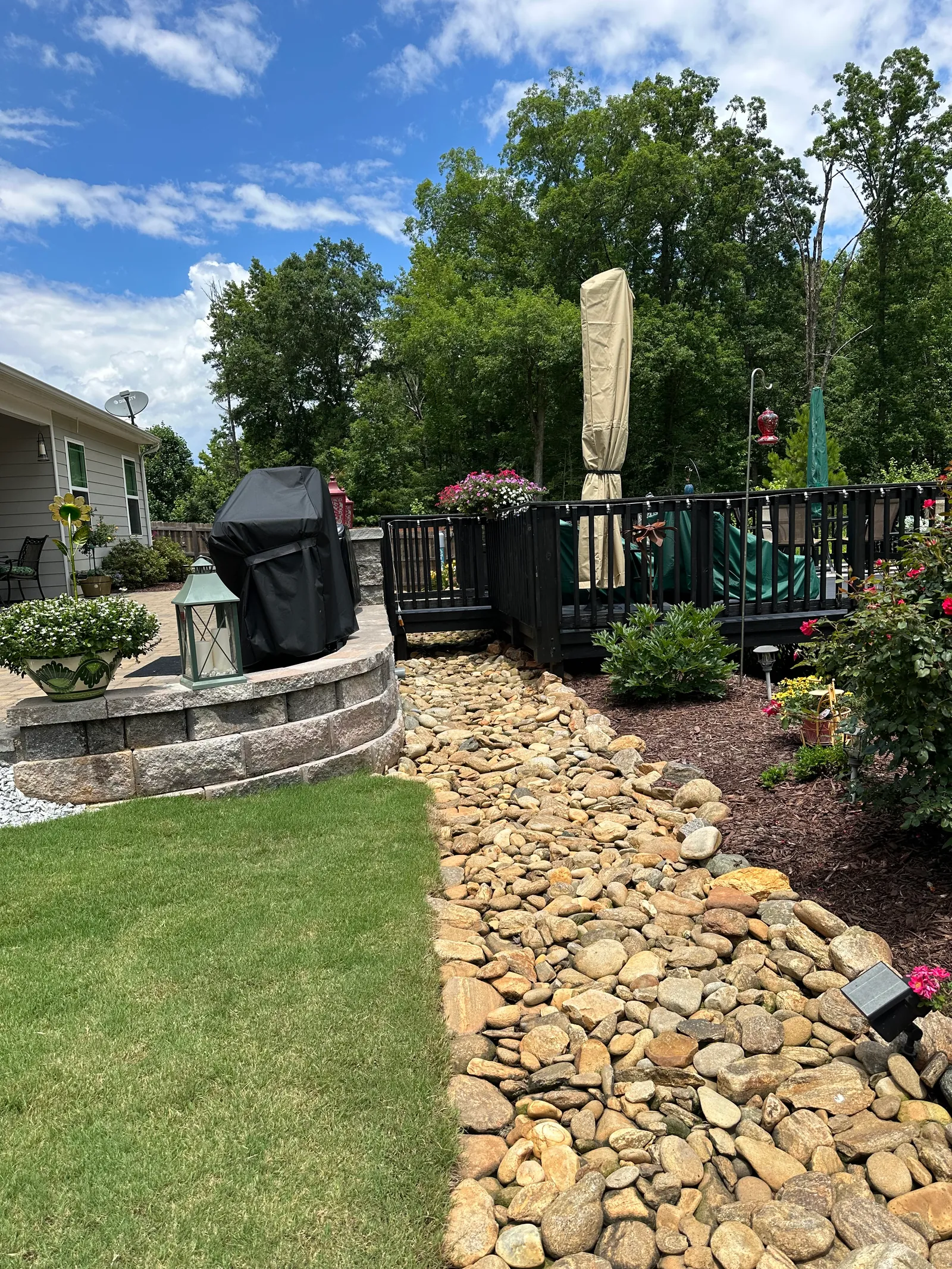
A drainage plan does not have to make a backyard feel like a utility project. With the right design, functional features can blend into an attractive landscape through shaped grading, planted swales, stone accents, clean edging, and hardscape surfaces built to shed water correctly.
For homeowners in Greenville, Simpsonville, Mauldin, Taylors, Anderson, and surrounding communities, early attention to water movement can preserve the spaces that make a property enjoyable. A careful site evaluation before the next outdoor project can turn a recurring wet-weather frustration into a cleaner, more usable backyard built for every season.
Related Articles
Hardscape Contractor Hiring Checklist for Upstate SC
September 7, 2026
Use this hardscape contractor hiring checklist to compare experience, design, estimates, drainage planning, and crews for your Upstate SC home project.
Hardscape Benefits for a Better Upstate Yard
August 22, 2026
See how hardscape benefits can improve comfort, curb appeal, drainage, and outdoor living for Upstate South Carolina homeowners planning projects at home.
Backyard Hardscape Planning for Better Outdoor Living
August 20, 2026
Backyard hardscape planning helps Upstate SC homeowners create patios, fire features, and outdoor areas that fit the site, budget, and daily life with ease.
Ready to start your project?
Tell us about your space and we'll follow up to schedule a consultation.