
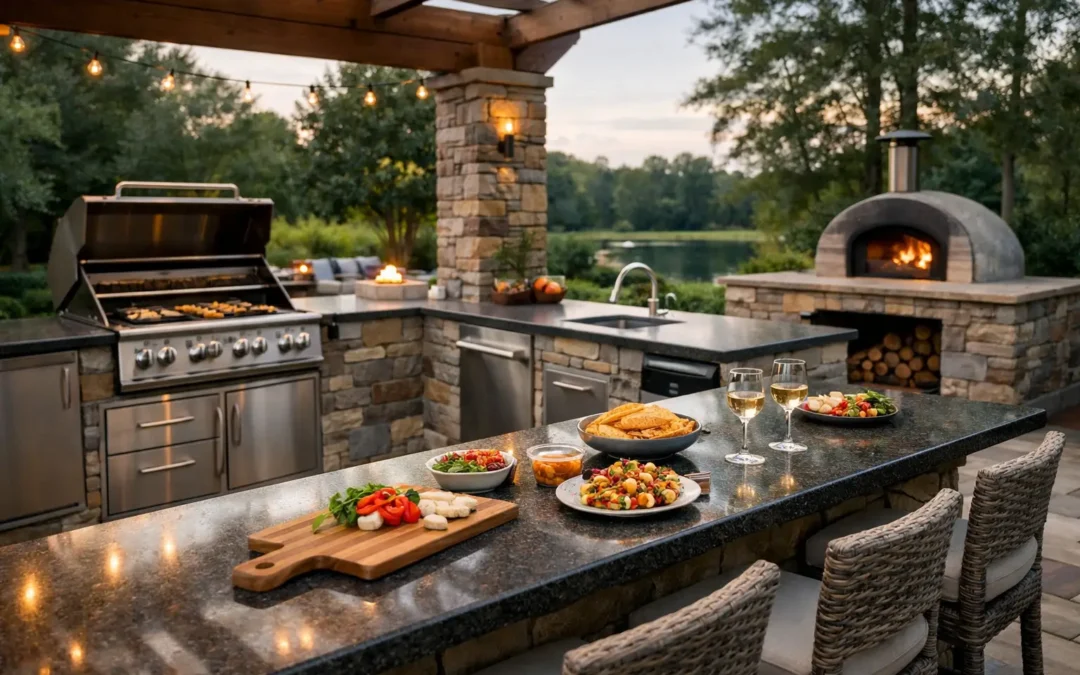
A grill on a patio can make dinner easier. A well-planned outdoor kitchen can change how your family uses the entire backyard. When homeowners look for an outdoor kitchen builder in Greenville, SC, they are often looking for more than a countertop and grill cutout. They want a comfortable place to cook, gather, relax near the pool, and host friends without constantly walking back inside.
That outcome takes more than selecting appliances. An outdoor kitchen must fit the property, connect naturally to the home, handle Upstate South Carolina weather, and give the homeowner useful space without overwhelming the yard. The best projects begin with a clear plan for how the space will actually be lived in.
What a Good Outdoor Kitchen Should Do
An outdoor kitchen should make time outside feel easier, not create another area that needs constant attention. Before choosing finishes or appliances, consider the moments the space needs to support. A family that cooks outdoors twice a week has different needs than homeowners who regularly host game-day gatherings, neighborhood dinners, or large holiday events.
A practical layout usually creates room for three activities: cooking, serving, and sitting. The cook should have landing space beside the grill, convenient access to trash and storage, and a clear path to the house. Guests should be able to visit without standing directly in the cooking zone. If the kitchen includes a bar or island, it should invite conversation while leaving enough circulation space around it.
For many homes in Greenville, Simpsonville, Greer, and Taylors, the strongest designs also connect the kitchen to a patio, firepit, pool deck, or landscaped seating area. This creates an outdoor destination rather than a collection of separate features. The kitchen becomes part of the backyard’s overall rhythm.
Choosing an Outdoor Kitchen Builder in Greenville, SC
A quality builder should look beyond the appliance package. The location of the kitchen, the condition of the existing patio, drainage patterns, elevation changes, utility access, and surrounding landscape all affect the final result. A kitchen that looks impressive in a showroom may not work on a sloped backyard or beside a pool with limited deck space.
Start by discussing how you use your property now and what you wish it could do better. Perhaps your current grill is too far from the dining table. Maybe your patio feels undersized, the backyard lacks evening lighting, or guests gather in an awkward bottleneck near the back door. These details help shape a design that solves real problems.
An experienced outdoor kitchen builder will also explain trade-offs clearly. A large island provides generous prep space and seating, but it can crowd a compact patio. Natural stone brings character and durability, but its cost and maintenance can differ from manufactured materials. A built-in refrigerator is convenient, yet it requires proper ventilation and protected electrical service. Good recommendations are not about adding every possible feature. They are about investing in the features that suit your home and lifestyle.
Look for Integrated Design and Construction
Outdoor kitchens sit at the intersection of landscaping and hardscaping. They need a stable base, properly built masonry or framing, durable countertop support, and thoughtful utility coordination. They also need to look at home beside lawns, planting beds, retaining walls, walkways, and other outdoor features.
That is why a full-service approach matters. A builder who understands both hardscape construction and landscape design can plan the kitchen as part of a complete environment. Instead of adding a grill island to an existing concrete slab and hoping it fits, the project can account for patio expansion, paver patterns, garden borders, lighting, privacy plantings, and access paths from the beginning.
At Innova Hardland, that integrated approach helps homeowners turn ordinary yards into polished spaces designed for everyday enjoyment and entertaining. The goal is not simply to install an outdoor kitchen. It is to create a setting that feels intentional from the moment you step outside.
Plan for Upstate South Carolina Conditions
Upstate SC offers a long outdoor season, but the climate still places real demands on materials and installation. Heat, humidity, summer storms, leaf debris, freeze-thaw cycles, and heavy rain all deserve attention during planning.
Drainage is one of the most important considerations. Water should move away from the home and should not collect around the kitchen base, patio, or appliance connections. If a yard has a slope, a builder may need to adjust grading, add drainage solutions, or incorporate a retaining feature before constructing the finished kitchen. Ignoring these issues can lead to settling, staining, standing water, and expensive corrections later.
Material selection matters as well. Countertops need to withstand sun exposure, moisture, food spills, and regular cleaning. Cabinet materials should be designed for exterior use, not simply repurposed indoor products. Masonry and pavers need a properly prepared foundation so they remain stable through changing weather conditions.
Shade is another decision that depends on the site. A pergola, covered structure, or strategically placed shade solution can make afternoon cooking more comfortable. However, coverage should be planned around smoke clearance, local requirements, drainage, and the amount of sun the area receives. In some yards, mature trees or the home’s roofline already provide enough relief. In others, a shaded seating area beside the kitchen is more valuable than covering the cooking station itself.
Build the Right Size, Not the Biggest Kitchen
More square footage is not always better. A modest outdoor kitchen can be highly effective when it includes a quality grill, useful counter space, storage, and a nearby dining area. For a smaller yard in Mauldin, Fountain Inn, Easley, or Travelers Rest, a compact L-shaped layout may preserve valuable lawn and garden space while still supporting meals for family and friends.
Larger properties in areas such as Spartanburg, Anderson, Pickens, or Seneca may have room for a more complete entertainment zone. This could include multiple cooking appliances, a beverage station, a bar with seating, a fireplace or firepit, and an expanded paver patio. Even then, the layout should preserve open areas, views, and comfortable movement between the kitchen, pool, and house.
The right size comes down to frequency of use, the number of people you host, and the rest of your outdoor plan. Spend where daily convenience matters most. A dependable grill, durable surfaces, solid construction, and enough prep space usually provide more lasting value than a long list of specialty appliances that rarely get used.
Ask Questions Before Construction Begins
Clear communication protects the homeowner and improves the finished project. Before work starts, make sure you understand the proposed layout, materials, utility needs, estimated construction sequence, and how the crew will protect the property during installation.
Ask where gas, electric, and water lines will run if they are part of the design. Confirm how existing landscaping, irrigation, gates, and access areas will be handled. Discuss whether permits or inspections may apply to the work. It is also reasonable to ask how the crew will manage cleanup, material storage, and daily jobsite organization.
The planning stage is the time to make adjustments. Moving a grill, widening a counter, changing the seating orientation, or adding a path is far simpler on paper than after masonry and utilities are in place. A professional builder will welcome those conversations and provide recommendations that keep the project aligned with your budget and priorities.
Make the Kitchen Feel Like It Belongs
The most successful outdoor kitchens reflect the home’s architecture and the character of the yard. A traditional brick home may call for warm-toned pavers and masonry details. A newer home with clean lines may suit a more contemporary palette with streamlined counters and structured planting beds. The goal is coordination, not an exact match.
Lighting and landscaping finish the experience. Task lighting helps with evening cooking, while softer lighting can define walkways, planting beds, and seating areas. Greenery softens hardscape surfaces, adds seasonal color, and gives the kitchen a more settled, inviting feel. Privacy plantings can also make an exposed patio feel more comfortable without closing off the yard.
A thoughtfully built outdoor kitchen gives your backyard a reason to be used more often. Plan it around the meals, conversations, and quiet evenings you want to have there, and the finished space can serve your family beautifully for years.