
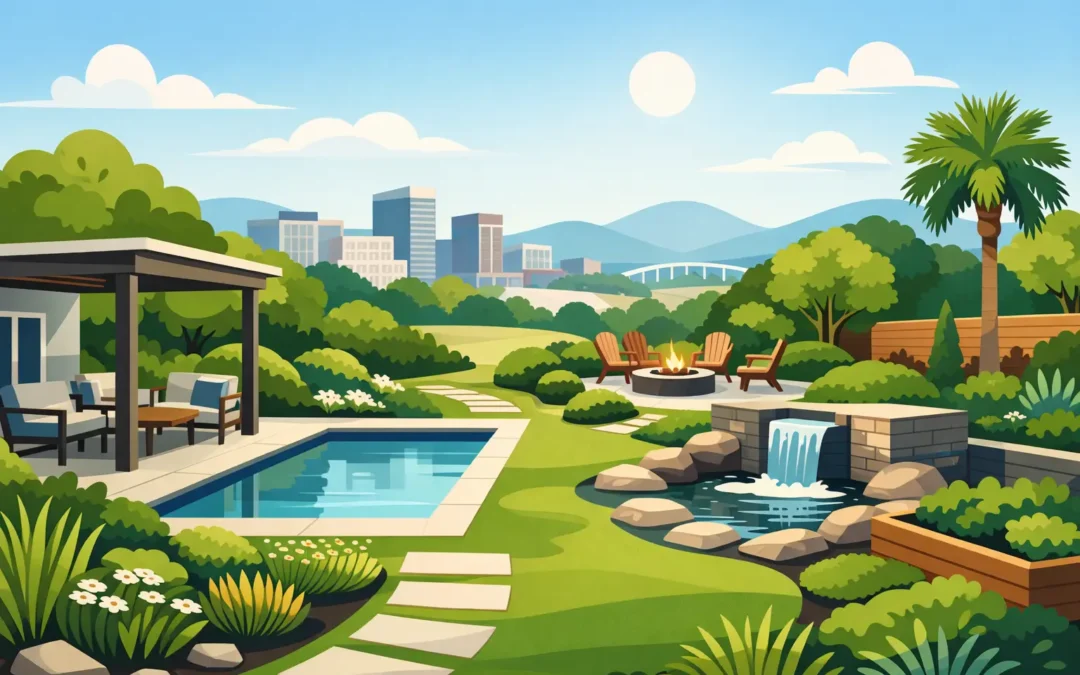
A Greenville yard can look perfectly manageable in January and reveal its real challenges during a July downpour. Water collects beside the patio, a sunny lawn turns thin under summer heat, or a steep side yard becomes an area nobody uses. Effective landscape design Greenville SC homeowners can rely on starts by solving those property-specific issues, then turns the space into a place that looks polished and works for everyday life.
The best outdoor spaces do more than add flowers around the foundation. They give people a reason to step outside. That may mean a paver patio for family dinners, a firepit for cool evenings, a pool deck with room to relax, or a cleaner, more welcoming front entrance. The design should reflect how the household actually lives, while respecting Greenville’s slopes, clay soils, heavy rain, and long growing season.
What Landscape Design Greenville SC Should Address
A complete landscape plan brings living elements and built features together. Planting, lawns, garden beds, and trees provide softness, color, shade, and seasonal interest. Hardscaping creates the structure that makes a yard functional: patios, walkways, retaining walls, driveways, outdoor kitchens, fireplaces, and defined pool areas.
Neither side should be treated as an afterthought. A beautiful planting plan can feel disconnected if there is no comfortable place to sit or walk. A large patio can feel stark without greenery to frame it, soften hard edges, and create privacy. When both are planned together, the result feels intentional from the driveway to the back property line.
Before selecting materials or plants, a contractor should study the conditions already present. Grade, drainage paths, sun exposure, access for construction equipment, existing utilities, mature trees, and views from inside the home all influence the right solution. A backyard that faces west needs a different strategy than one shaded by hardwoods. A low area may need drainage improvements before it receives sod, artificial turf, or a new patio.
Start With How You Want to Use the Space
The most useful question is not, “What should we plant?” It is, “What do we want this yard to do?” A family that hosts weekend cookouts may need a generous patio connected to an outdoor kitchen and seating area. Homeowners who want a quiet retreat may prefer a smaller terrace, a fireplace, layered plantings, and screening from nearby properties.
For many Greenville households, the backyard must serve more than one purpose. Children may need open room to play, adults may want a durable entertainment area, and pets may need a surface that holds up through muddy weather. Dividing the yard into clear zones helps prevent one feature from crowding out another. A lawn or artificial turf area can sit near the home, while a firepit or garden destination creates a separate place to gather farther into the yard.
Front-yard design has a different job. It should improve curb appeal, create a clear approach to the entry, and make routine maintenance more manageable. Updating a tired walkway, restoring brick pavers, reshaping planting beds, or adding a defined driveway edge can make the entire property feel more cared for without requiring a complete overhaul.
Design for Upstate Conditions, Not a Magazine Photo
Greenville County properties rarely offer a one-size-fits-all canvas. Red clay can be compacted and slow to drain. Sloped lots can send water toward a foundation or wash mulch out of beds. Summer sun is intense, but dense tree cover may leave portions of the same yard in deep shade. Good design responds to these realities rather than covering them up temporarily.
Drainage is often the first priority. If water stands near the house, crosses a walkway, or flows toward a patio, the grading and water-management plan need attention before decorative improvements begin. Depending on the site, that could involve reshaping grade, adding drainage components, or using retaining features that stabilize a changing elevation. Skipping this step can put new pavers, turf, lawn areas, and plantings at risk.
Plant selection should also match the site. A low-maintenance garden does not mean no maintenance, but it does mean choosing plants that suit the available sun, soil, and moisture. Thoughtful layering can provide year-round structure: evergreen anchors, flowering shrubs, ornamental grasses, perennials, and seasonal color where it makes sense. Mulch beds should be sized for healthy plants and easy edging, not simply squeezed into leftover strips along the house.
Hardscaping Gives Outdoor Living Its Foundation
Hardscape work is where an outdoor vision becomes usable square footage. A properly designed patio creates a stable setting for furniture, grilling, and conversation. A walkway keeps foot traffic out of muddy lawn areas. A retaining wall can turn an awkward slope into a level terrace with a clear purpose.
Material choice matters, but installation quality matters just as much. Pavers, natural stone, concrete, and brick each offer a different appearance, maintenance profile, and cost range. Brick can complement a traditional Greenville home, while large-format pavers may suit a more contemporary exterior. The right choice depends on the architecture of the house, the intended use of the space, and the homeowner’s budget.
The work beneath the finished surface is critical. Proper base preparation, grading, compaction, and edge restraint help patios and walkways perform through changing weather. A patio should drain away from the home, feel stable underfoot, and have enough room for the furniture and circulation it is meant to support. A beautiful surface that is too small or poorly drained will not serve the homeowner well.
Features such as firepits, outdoor fireplaces, kitchens, and pool decks deserve the same careful planning. They need appropriate clearances, durable materials, and a layout that allows people to move comfortably. It is often wiser to build a well-proportioned patio with one meaningful focal feature than to crowd several features into a limited area.
Build in the Right Order
Outdoor projects run more efficiently when the sequence is clear from the start. Drainage corrections, grading, and structural work should come before final surfaces and planting. Walls, patios, driveways, and utility-related work generally need to be completed before sod, turf, garden beds, and finishing details are installed.
This order protects finished landscape areas from unnecessary disruption and gives every feature a more deliberate place. It also helps homeowners understand where their budget is going. If a property needs major grading or a retaining solution, addressing that need first may mean phasing decorative improvements. That is not a compromise in quality. It is often the smartest way to protect the long-term result.
A professional crew should also respect the property while work is underway. Organized material staging, communication about schedule changes, clean daily work areas, and final cleanup make a significant difference. Construction can be disruptive, but it should not leave homeowners feeling as if their property has been taken over.
Choose a Design-Build Partner Who Listens
A landscape concept only has value if it can be built correctly. Working with a contractor that handles both design direction and installation helps reduce the gap between an attractive idea and a completed outdoor environment. The team can evaluate site limitations early, recommend practical materials, coordinate the work, and adjust details before they become expensive problems.
Ask direct questions before moving forward. How will drainage be handled? What preparation is included under the patio or driveway? Which portions of the plan are best completed now, and which can be phased later? How will the crew protect existing features that are staying? Clear answers build confidence and help establish realistic expectations for timing and budget.
Innova Hardland approaches these decisions as connected parts of one property, not isolated tasks. That perspective helps homeowners create outdoor destinations with the structure, greenery, and everyday usability their yards need.
The right landscape does not have to be the largest project on the block. It simply needs to make the home feel more complete each time you pull into the driveway, open the back door, or invite friends and family outside.