
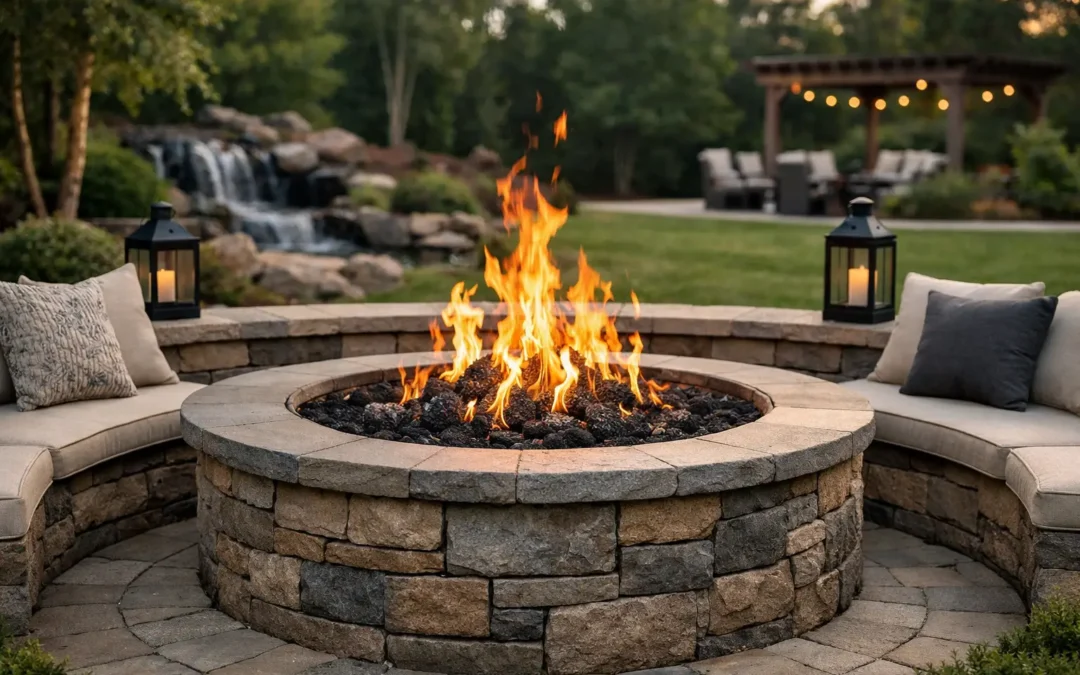
A firepit can turn a patio that sits empty after dinner into the place everyone gathers when the temperature drops. But a successful custom firepit installation Greenville SC homeowners can enjoy for years is not simply a matter of setting stones in a circle. It starts with a plan for how your family uses the yard, where guests will sit, how water moves across the property, and what will look at home with the rest of your outdoor space.
For homeowners across Upstate South Carolina, a well-built firepit creates a natural center for cool fall evenings, spring conversations, and relaxed weekends at home. The best projects feel intentional from every angle: the fire feature, patio, landscaping, lighting, walkways, and seating work together rather than competing for space.
Start With How You Want to Use the Space
Before choosing stone colors or a firepit shape, consider what you want the area to do. A compact circular firepit may be ideal for a couple who wants a quiet spot off the back patio. A larger rectangular fire feature can better suit a family that regularly hosts neighbors, celebrations, and game-day gatherings.
The number of people you expect to seat affects more than the size of the firepit. It determines the patio footprint, the walking room around chairs, and whether built-in seating would make the space more comfortable. A firepit that looks appropriately sized by itself can feel crowded once Adirondack chairs, side tables, and people are added.
It also helps to think about the season. Wood-burning firepits offer the familiar sound, aroma, and ritual of a natural fire. Gas firepits provide quick ignition, consistent flames, and easier cleanup. Neither is automatically the better choice. The right fit depends on your preferences, access to utilities, maintenance expectations, and the character of the outdoor environment you want to create.
Choosing the Right Firepit Location
Location has a major influence on safety, comfort, and the finished appearance of the project. A firepit should feel connected to the home without being placed so close that smoke, heat, or traffic becomes a problem. It also needs appropriate clearance from structures, rooflines, fences, trees, and other combustible materials.
In Greenville, Simpsonville, Greer, and surrounding communities, many backyards have slopes, mature trees, or drainage paths that need careful consideration. A low area might look like an easy place for a patio, but it can collect water after a heavy Upstate rain. Building in the wrong location can lead to settling, standing water, muddy edges, and a feature that is less inviting than it should be.
A professional site evaluation looks beyond the open space visible from the back door. It considers grade changes, utility locations, access for construction, nearby plantings, sunlight, wind patterns, and how the firepit will connect to existing patios or pool decks. Sometimes the best solution is a new destination area farther into the yard, reached by a paver or natural stone walkway. In other cases, extending an existing patio creates the most practical and cost-conscious result.
Keep Traffic Flow Comfortable
A firepit should not interrupt the routes people already use. Guests need room to move between the house, seating, grill, pool, and yard without squeezing behind chairs or crossing too close to the flames. When the feature is placed within a larger hardscape plan, these details can be resolved before construction begins.
For smaller yards in Mauldin, Taylors, Fountain Inn, or Travelers Rest, thoughtful proportions matter even more. A modest firepit with a clean seating area often feels more polished than an oversized feature that consumes the entire backyard.
Materials Should Match the Home and the Landscape
A custom firepit is a permanent visual feature, so its materials should relate to the home rather than feel like an afterthought. Brick, natural stone, concrete pavers, and manufactured wall block can all create attractive results. The best selection depends on the architecture of the house, the patio material, the desired maintenance level, and the overall budget.
For example, a traditional brick home may benefit from a firepit that picks up warm tones found in the exterior masonry. A contemporary home with a modern paver patio may call for cleaner lines, smooth caps, and a rectangular gas feature. Natural stone can create a more organic look that pairs especially well with garden beds, wooded lots, and rustic landscape settings.
The surrounding surface matters just as much as the firepit itself. A durable paver patio, stone terrace, or properly constructed concrete area gives chairs a stable place to sit and helps define the gathering zone. Grass alone can work for a simple, temporary setup, but it tends to wear down quickly around a frequently used firepit. A finished hardscape surface is cleaner, easier to maintain, and more comfortable after rain.
The Hidden Work Determines Long-Term Performance
The visible stonework gets attention, but the base preparation beneath a custom firepit installation is what protects the investment. Proper excavation, compacted aggregate, edge restraint where needed, and grading all help prevent shifting and uneven surfaces over time.
Drainage deserves particular attention in Upstate SC. Water should move away from the house and avoid pooling around the patio or firepit. Depending on the site, a project may need subtle grading changes, drainage solutions, or a patio layout that directs water toward an appropriate outlet. Skipping these decisions can turn a beautiful new gathering space into a recurring maintenance issue.
Gas fire features require another layer of planning. The gas line, connections, and ignition components should be installed correctly and coordinated with the final firepit design. Local requirements can vary, so homeowners should verify applicable permitting, utility, and safety expectations before work begins. A qualified contractor can help identify those questions early, when adjustments are easier and less expensive.
Add Features That Make the Space More Usable
A firepit becomes more valuable when the surrounding details support how people gather. Built-in seat walls can provide dependable seating without filling the patio with furniture. They are especially useful for larger groups and can double as a visual boundary between the patio and lawn.
Low-voltage landscape lighting can make paths, patio edges, and nearby plantings easier to enjoy after dark. Thoughtful planting softens the hardscape and helps the firepit feel established in the yard. Ornamental grasses, evergreen structure, flowering shrubs, and seasonal color can frame the area without obstructing views or creating a cluttered look.
For homeowners planning a broader outdoor upgrade, the firepit may be one element of a larger destination: a patio near an outdoor kitchen, a lounge area beside a pool deck, or a garden retreat connected by walkways. Coordinating the full project at the beginning usually produces a more cohesive result than adding unrelated features over several years.
What a Professional Installation Process Should Feel Like
Good firepit construction is as much about communication as craftsmanship. The planning phase should clarify the intended use, layout, materials, approximate schedule, site conditions, and budget priorities. Homeowners should understand what is included before work starts, especially if the project involves demolition, drainage work, utility coordination, or new landscaping.
During installation, professional crews protect the property, keep the work area organized, and make reasonable efforts to minimize disruption. Construction can be messy at certain stages, particularly during excavation and base preparation, but the jobsite should not remain chaotic. Final cleanup, careful finishing, and a walkthrough of the completed space are part of delivering a project that feels complete.
Innova Hardland approaches outdoor improvements as integrated environments, not isolated features. That means looking at how a firepit relates to the patio, lawn, planting beds, walkways, and the way your household actually spends time outside.
A Firepit Worth Gathering Around
The strongest firepit designs do not depend on size or elaborate ornament. They earn their place by making the backyard more useful, more comfortable, and more inviting through every season. Whether your property is in Easley, Spartanburg, Anderson, Pickens, Seneca, or closer to Greenville, the right plan can turn an underused corner of the yard into the place where people naturally want to stay a little longer.
Choose a design that respects the site, fits the home, and leaves enough room for the moments you want to create around it.